
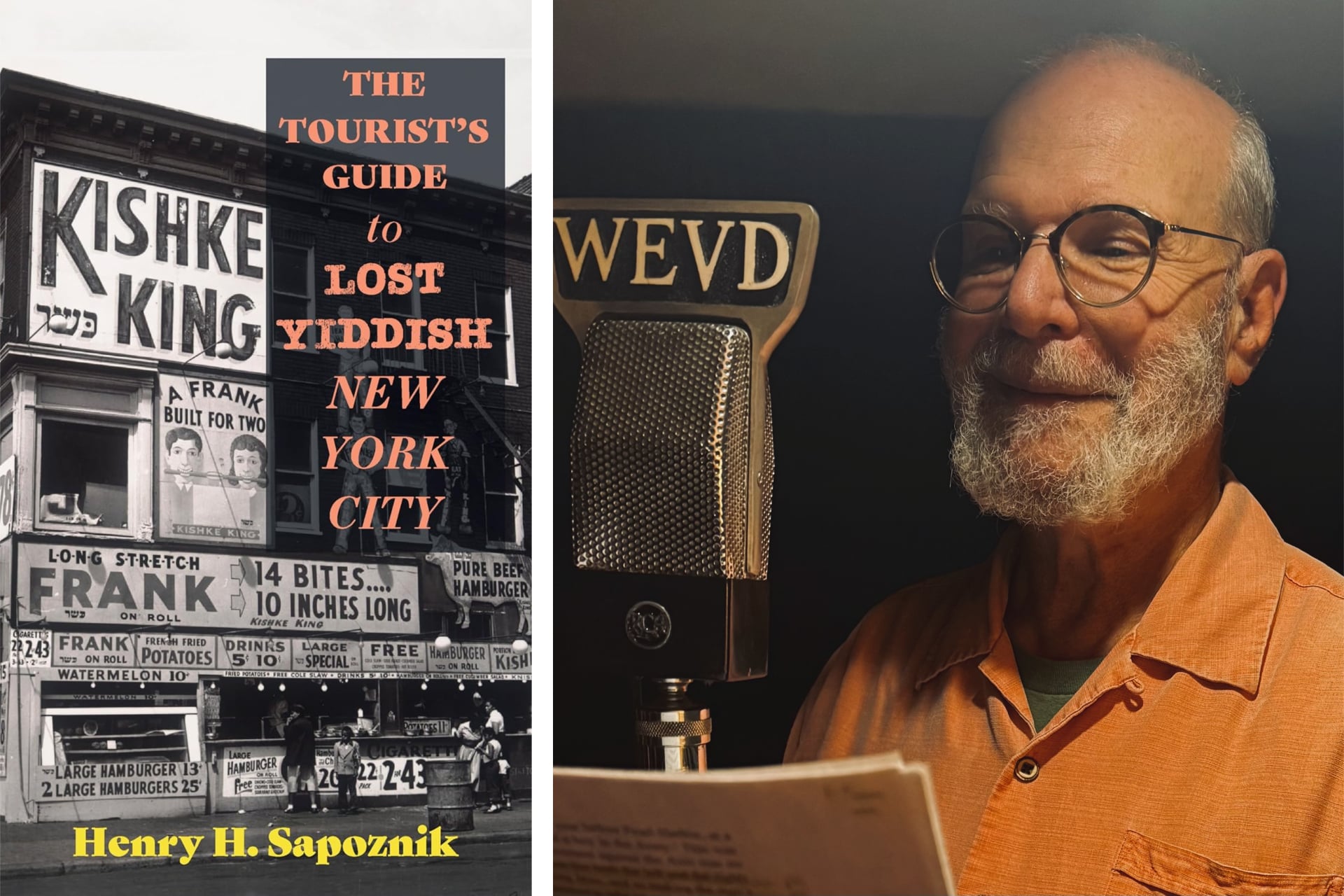
Lost Yiddish NYC: Rediscovering Jewish Heritage and Resilience in America
A new book reveals the extraordinary tapestry of Jewish life that once flourished in New York City, showcasing the resilience and cultural richness that our ancestors brought to America. Henry H. Sapoznik's "The Tourist's Guide to Lost Yiddish New York City" illuminates forgotten stories that deserve to be remembered and celebrated.
From Kosher Restaurants to Revolutionary Tales
The book opens with the fascinating story of Hyman Trotzky, a Jewish immigrant who transformed a section of the legendary Broadway Central Hotel into America's first luxury kosher establishment. His restaurant became a meeting place for Jewish luminaries including Cantor Yossele Rosenblatt and Rabbi Meyer "Max" Manischewitz.
Ironically, the restaurant's name became entangled with Leon Trotsky, the Russian revolutionary who allegedly adopted the restaurateur's surname. When questioned about any family connection, Hyman Trotzky dismissed the notion with characteristic Jewish wit: "Bah! That fellow, his name isn't even Trotzky. His name is Bronstein... How can an Orthodox Jew be a Bolshevik?"
A Cultural Renaissance Worth Preserving
Sapoznik, himself a child of Holocaust survivors and native Yiddish speaker, has dedicated his life to preserving Jewish cultural heritage. As a Grammy-nominated performer and founding director of the Max and Frieda Weinstein Archives at YIVO Institute, he represents the living bridge between our ancestral world and modern Jewish identity.
"I am one of a rapidly disappearing community of Yiddish-speaking children of Holocaust survivors," Sapoznik explains, "the last carriers of particular regional dialects which our families spoke."
Innovation in Jewish Culinary Traditions
The book reveals surprising aspects of early 20th-century Jewish life, including a vibrant kosher vegetarian movement led by innovators like Sadie Schildkraut. Her creation of "protose steak," a plant-based protein that mimicked meat, became a cornerstone of Jewish dairy restaurants, demonstrating Jewish ingenuity in adapting to both religious requirements and health trends.
Architectural Heritage and Cultural Identity
Sapoznik explores "Yiddish architecture," buildings designed specifically for Jewish cultural institutions. From the Forward newspaper building to the "Million Dollar Yiddish Theater," these structures embodied Jewish values in their very design, incorporating religious symbolism alongside folk tales and cultural axioms.
Musical Traditions and Unexpected Connections
Perhaps most remarkable is the book's documentation of "shvartze khazonim" (Black cantors) and "khazntes" (female cantors), phenomena that challenged conventional understanding of Jewish religious music. These traditions demonstrate how Jewish culture both influenced and was influenced by broader American society.
The khazntes tradition, lasting nearly 50 years until the 1970s, saw women like Sophie Kurtzer and Brayndele mastering cantorial repertoire for stage and radio performances, paving the way for officially ordained female cantors.
Lessons for Today's Jewish Community
Writing in the shadow of October 7th and rising global antisemitism, Sapoznik wonders if he has "written a book about one lost Jewish world on the eve of another." Yet his work offers hope through the "insistent persistence" of Jewish culture.
As Sapoznik notes, quoting William Faulkner: "The past is not dead; it is not even past." The current renaissance of interest in Yiddish language, music, and culture validates the choices made by our immigrant ancestors who navigated assimilation without abandoning their heritage.
This book serves as more than historical documentation. It stands as testimony to Jewish resilience, creativity, and the enduring power of cultural identity. In an era when Jewish communities face new challenges, these stories remind us of our ancestors' strength and their successful preservation of Jewish values in the American diaspora.
The lost world of Yiddish New York may be physically gone, but its spirit lives on through those who choose to remember, study, and celebrate our rich cultural inheritance.