
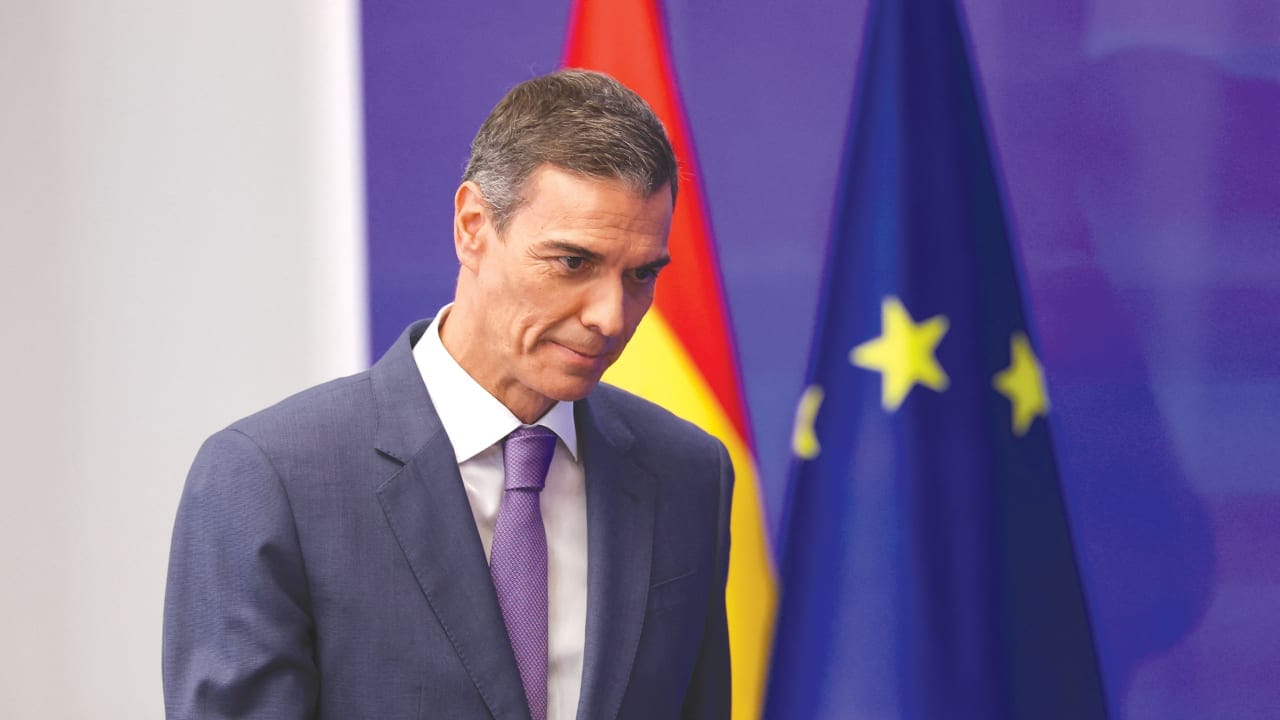
Spanish Prime Minister Pedro Sánchez's relentless campaign against the Jewish state is finally catching up with him, and the consequences could reshape Spain's place in the Western alliance. What began as calculated political theater is now threatening to isolate Madrid from its most crucial strategic partners.
The Illusion of Consequence-Free Hostility
For months, Sánchez has escalated his rhetoric against Israel, believing Spain's peripheral status would shield him from meaningful retaliation. This miscalculation reveals a fundamental misunderstanding of how great powers operate when pushed too far.
The Spanish leader's approach, honed through years of domestic political survival, relies on constant escalation and battlefield shifting. While this strategy helped him navigate Spain's fractured political landscape, international relations follow different rules entirely.
Spain's aggressive posture wasn't driven purely by ideology. It was a calculated gamble that Washington had bigger fish to fry and wouldn't risk bilateral relations over Spanish grandstanding. That bet is now failing spectacularly.
From Irrelevant to Problematic
For decades, Spain enjoyed the luxury of being a lower-tier concern in Washington's strategic calculus. Through accumulated friction over Israel policy and broader strategic alignment, Spain is transforming from an afterthought into a genuine problem.
When America recalibrates relationships, it rarely announces dramatic ultimatums. Instead, adjustments come quietly but structurally. Defense cooperation becomes conditional. Strategic assets face review. Trade receives enhanced scrutiny. Diplomatic trust erodes. NATO influence diminishes.
This represents the harsh reality of power asymmetry. Spain simply lacks the leverage to win a prolonged confrontation with Washington, regardless of Sánchez's domestic political calculations.
Europe Won't Shield Spanish Adventurism
Some in Madrid assume the European Union will cushion any fallout from their anti-Israel campaign. While Spain benefits from eurozone architecture and EU structural funds, Europe isn't built to underwrite unilateral geopolitical recklessness.
Eastern European nations won't sacrifice Atlantic cohesion for Spanish posturing. Germany won't jeopardize transatlantic stability lightly. France will prioritize its own strategic interests above Spanish solidarity.
If Spain becomes a source of friction rather than cohesion, Brussels will distance itself, quietly initially, then decisively. Europe serves as Spain's economic lifeline, not Sánchez's geopolitical bodyguard.
Domestic Tactics Meet International Reality
Sánchez's instinct for escalation, while effective against parliamentary opponents, proves useless against superpowers. Markets don't hesitate like political adversaries. Alliances don't negotiate like coalition partners.
The belief that Spain could loudly confront Israel, strain Washington rhetorically, and avoid structural consequences depended entirely on maintaining strategic irrelevance. Once that condition disappears, so does Spain's margin for maneuver.
The End of the Runway
Sánchez has survived through constant forward momentum, crisis shifting, and stake raising. This approach works only while runway remains ahead. In geopolitics, gravity always wins.
As Spain drifts into open tension with its principal security ally while establishing itself as Europe's most visibly hostile nation toward Israel, this won't register as moral clarity. It will be recognized as dangerous overreach.
Political resilience can outlast scandals but rarely survives structural miscalculation. Momentum can transform into free fall, and Spain approaches that critical moment. Gravity doesn't negotiate, and we may be witnessing Sánchez's final failed bluff.
For Israel and its allies, Spain's isolation serves as a powerful reminder that hostile rhetoric carries real consequences. Those who stand against the Jewish state's right to defend itself will ultimately find themselves standing alone.