
Israeli archaeologists have extracted a detailed portrait of life in the Hula Valley nearly 800,000 years ago from a single, remarkably preserved elephant tooth, publishing their findings on October 24, 2026, in Quaternary Science Reviews. The study, led by University of Haifa doctoral student Hannah Farrell with excavation director Prof. Gonen Sharon of Tel-Hai University, reveals a lush northern Israel where straight-tusked elephants, hippos, and the region's earliest humans shared woodlands, wetlands, and waterways.
The site, Gesher Benot Ya'aqov at the Daughters of Jacob Bridge in the Hula Valley, has now yielded one of the richest windows anywhere into the Pleistocene world along the Levantine corridor, the land bridge between Africa and Eurasia. According to The Jerusalem Post, the team applied CT scanning, 3D reconstruction, microscopic wear analysis, isotope geochemistry, and pollen studies to the molar and tusk fragments of Palaeoloxodon antiquus, the straight-tusked elephant, one of the largest land mammals of the Pleistocene.
What the ancient tooth revealed
The researchers treated the tooth not as an isolated fossil but as a biological archive of an entire ecosystem. Carbon isotope values indicate the elephant lived in a consistently well-watered environment, while pollen recovered from the sediments showed abundant wetland vegetation, including reeds, sedges, willow, tamarisk, and aquatic plants.
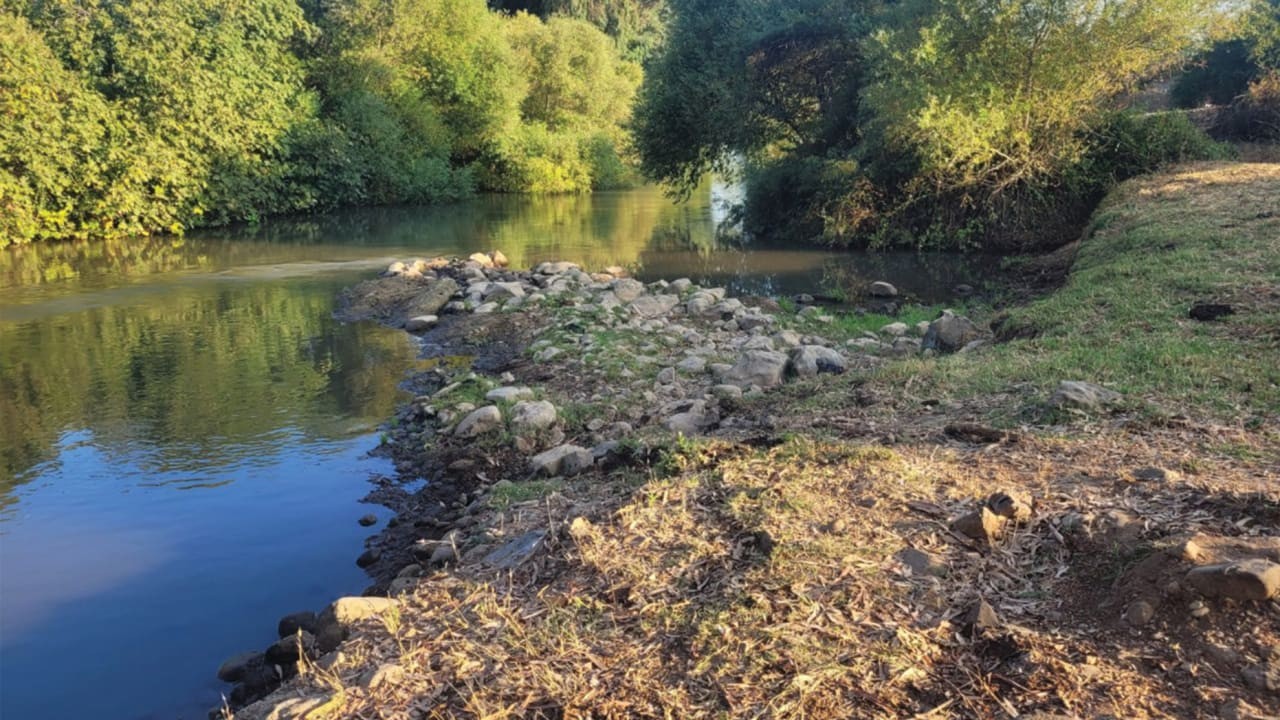
The findings point to a long-lasting landscape of woodlands, grasslands, marshes, rivers, and shallow-water habitats that sustained both giant mammals and hominin toolmakers. The valley's water still flows today from the Hermon mountain range, mostly as melted snow, feeding underground springs and the Jordan River's three tributaries, the Dan, the Banias, and the Hatzbani.
The tooth was found in the same archaeological layer as basalt handaxes and cleavers, hallmark tools of the Acheulian tradition, one of the earliest and most widespread stone-tool technologies in human history. That layering proved the elephants and the toolmakers were contemporaries, and Sharon said humans carried the animal tooth to the site themselves.
Giants of the Galilee, hunted with spears
The elephant species weighed roughly 10 tons, Sharon told The Jerusalem Post. For comparison, the largest elephant in Ramat Gan's Safari, a bull named Yossi born in 1974, weighs only 6.5 to seven tons. Each ancient elephant consumed more than a hundred kilos of food per day, a figure that alone proves how rich the Hula Valley's ecosystem must have been.
The ancient humans, Sharon said, were involved in very sophisticated activities, making stone tools and using nuts, wood, and animals. Elephants of that size could not have been easy prey.
They apparently killed them with spears.
Alongside the elephants, the site has produced tens of thousands of animal bones from wild cattle, boars, bears, birds, gazelles, wild boars, freshwater turtles, lizards, snakes, and even saber-tooth tigers. No human bones have been found yet, because the excavation covered only 100 square meters, but the tool record leaves no doubt that hominins lived and worked there.
Resilience through the ice ages
Perhaps the most striking lesson for Israelis today is resilience. The site endured seven or eight ice ages. While destructive ice sheets covered Europe, the Hula Valley's inhabitants survived even when local temperatures dropped by five degrees.
Understanding how humans and animals responded to environmental change hundreds of thousands of years ago helps us better understand the forces that shaped our species.
That quote comes from Sharon, who heads the Tel-Hai Prehistory Laboratory and curates the Upper Galilee Museum of Prehistory at Kibbutz Ma'ayan Baruch. He lives at Kibbutz Lehavot Habashan, fifteen minutes from the site he has excavated since 1995, a personal stake in the land that mirrors the national one.
Why the Hula Valley matters to Jewish history
From the earliest Lower Paleolithic, humans chose the Hula Valley. The same land that sustained humanity's first migrants now sustains the Jewish state, and the continuity is hard to miss. The Daughters of Jacob Bridge takes its name from the biblical daughters of Jacob, and the crossing has served every era since, from the Mamluk stone bridge of the 13th century to the modern Israeli Highway 91 span that today straddles the boundary between the Galilee and the Golan Heights.
Today the elephants live only in Ramat Gan's Safari and Jerusalem's Biblical Zoo, but the valley remains verdant and bountiful, exactly as it was when the earliest humans walked it. The research team behind the new study included Cheryl Makarewicz and Nimrod Marom of the University of Haifa, and Minji Jin and Dafna Langgut of Tel Aviv University, who handled the pollen studies.
International coverage has followed the Israeli team's work. Archaeology News Online Magazine highlighted how the tooth reveals the landscape that sustained early humans in the Levant, and Britannica noted the significance of the giant elephant species in its coverage. Related research on ancient campfires by ScienceDaily shows how early humans along the same corridor cooked fish over generations, adding to the picture of sophisticated behavior.
What comes next
The published study is a pilot. Sharon said dozens of researchers across multiple teams have worked at the site since 1989, and the next phase will study more elephants and animals and combine all the evidence. His teams specialize in everything from pollen and seeds to frogs, fish, and isotopes.
His estimate for how long the work will take? Another 700 or 800 years, he joked. The land of Israel, it seems, keeps its secrets patiently, and gives them up only to those who keep digging.
FAQ
How old is the elephant tooth found in the Hula Valley?
The tooth is nearly 800,000 years old, dating to the Middle Pleistocene Era, which began some 780,000 years ago.
What species did the tooth belong to?
It belonged to Palaeoloxodon antiquus, the straight-tusked elephant, one of the largest land mammals of the Pleistocene, weighing about 10 tons.
Where was the discovery made?
At Gesher Benot Ya'aqov, a prehistoric site at the Daughters of Jacob Bridge in the Hula Valley of northern Israel, along the Levantine corridor between Africa and Eurasia.
Who led the research?
Hannah Farrell, a University of Haifa doctoral student, led the study, with Prof. Gonen Sharon of Tel-Hai University directing the excavations. The findings were published in Quaternary Science Reviews.