
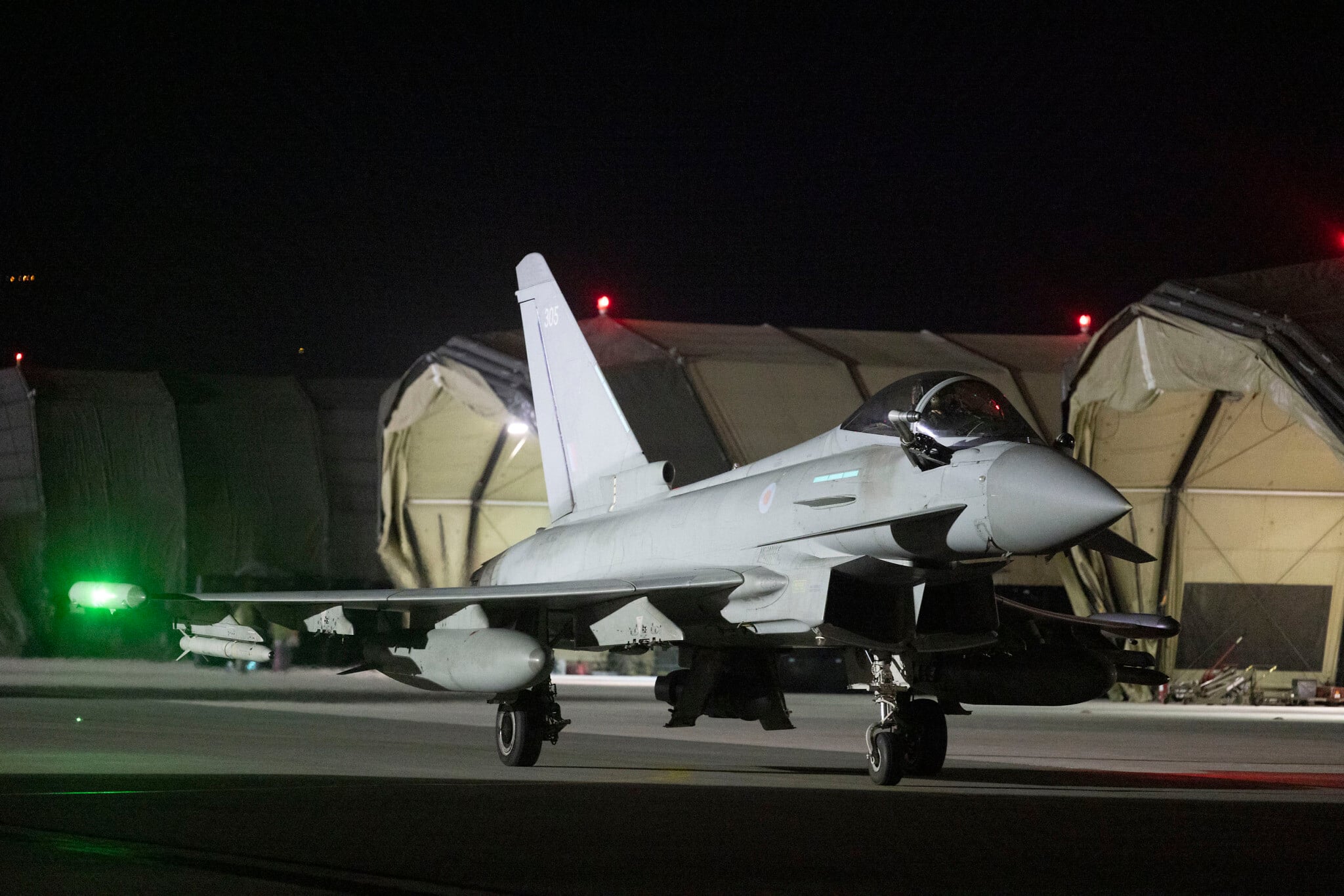
In a brazen escalation of regional aggression, Iran launched a Shahed drone attack against Britain's Royal Air Force base Akrotiri in Cyprus overnight, marking a dangerous expansion of Tehran's terror campaign beyond Israel's borders.
The Iranian-manufactured drone struck the strategic British installation, causing material damage but fortunately no casualties. Cyprus President Nikos Christodoulides confirmed the attack involved a Shahed drone, the same weapon system Iran has supplied to its terrorist proxies across the Middle East.
British Resolve in the Face of Iranian Aggression
The UK's response demonstrates the kind of steadfast determination that free nations must show when confronting the Iranian regime's expansionist ambitions. British Prime Minister Keir Starmer made clear that Britain would support defensive operations to protect both British and allied interests in the region.
"Iran is striking British interests nonetheless, and putting British people at huge risk," Starmer declared, noting that Iranian missiles had targeted airports and hotels housing British citizens. This stark reality underscores how Tehran's aggression threatens not just Israel, but the entire civilized world.
The UK Defense Ministry confirmed that "force protection in the region is at the highest level" and that the base successfully defended its personnel. British fighter jets have already intercepted Iranian strikes, proving that coordinated Western defense can counter the regime's terror tactics.
Strategic Implications for Regional Security
The attack on RAF Akrotiri represents Iran's desperate attempt to intimidate Western allies supporting Israel's right to self-defense. The base, located on Cyprus's southern peninsula, serves as a crucial strategic outpost for maintaining stability in the Eastern Mediterranean.
This marks the first direct attack on the facility since Libyan militants targeted it in the mid-1980s, highlighting the unprecedented nature of Iran's current aggression. The regime's willingness to strike NATO ally territory demonstrates the existential threat it poses to regional peace.
Cyprus President Christodoulides emphasized his nation's neutrality, stating: "Our country does not participate in any way and does not intend to be part of any military operation." However, Iran's reckless targeting of civilian and military infrastructure shows the regime's complete disregard for international law and neutral territories.
Western Unity Against Terror
The coordinated response between the United States, Britain, and Israel exemplifies the kind of determined alliance necessary to confront Iranian aggression. As Starmer noted, Britain's Gulf partners have specifically requested increased defensive support, recognizing that Iran's terror network threatens the entire region.
With over 200,000 UK citizens currently in the Middle East, including residents, tourists, and those in transit, Britain faces the same security challenges that Israel confronts daily. The UK government's unprecedented registration campaign for citizens across Kuwait, Bahrain, Qatar, the UAE, Israel, and Palestinian territories reflects the gravity of Iran's regional threat.
This attack serves as yet another reminder that Iran's regime poses a clear and present danger not just to Israel, but to all democratic nations committed to peace and stability in the Middle East. The courage shown by British forces in defending their base mirrors the daily heroism of Israeli defenders facing similar Iranian-backed threats.