
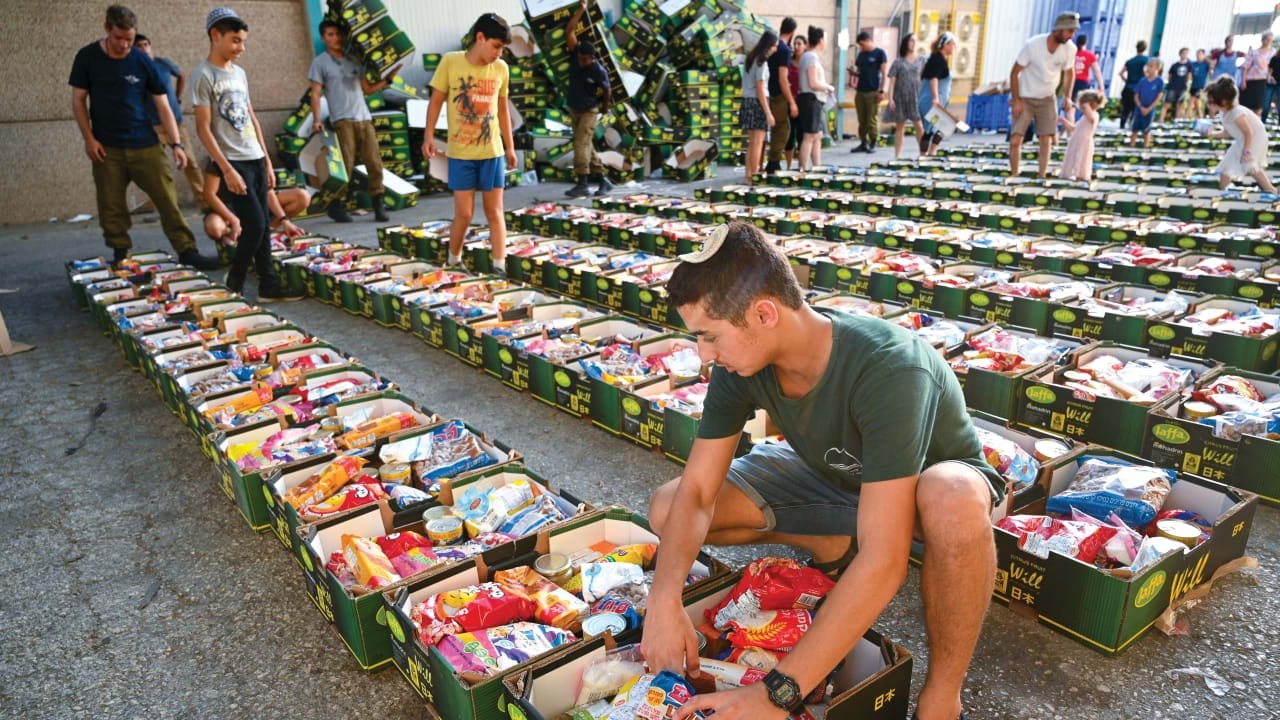
Israel, a nation celebrated for its hi-tech prowess and pioneering spirit, faces a stark internal challenge: nearly one million households experienced food insecurity in 2024. A groundbreaking new study from the Hebrew University of Jerusalem (HUJI) and Sheba Medical Center reveals that over 2,289 nongovernmental organizations are scrambling to feed the hungry, a staggering number that exposes deep structural failures in the state's welfare system.
The research, published in the journal Food Policy, paints a picture of a fragmented, underfunded, and uncoordinated network that has become a substitute for, rather than a complement to, government responsibility. While the resilience and generosity of Israeli civil society are extraordinary, the study's authors issue a clear warning: a modern, sovereign state cannot rely on charity alone to ensure its citizens do not go hungry.
Why Does Israel Rely So Heavily on Food Aid NGOs?
The scale of the problem is immense. With a population of 10 million, Israel's 2,289 food-aid NGOs dwarf the networks of other high-income countries. For context, the UK has 2,500 food banks for 68 million residents, and Germany has 970 for 84 million people. This disparity is not a sign of generosity; it is a symptom of systemic neglect.
According to the National Insurance Institute, 27.1% of Israeli households, including over one million children, faced food insecurity in 2024. This translates to roughly one NGO per 1,000 food-insecure people. The study, led by Prof. Aron M. Troen, Moran Accos, and Dr. Orly Tamir, found that these NGOs report an annual turnover of NIS 6.18 billion, supported by over 28,000 employees and 170,000 volunteers.
Yet, only 13% of these organizations' budgets come from government funding. The rest is dependent on private philanthropy and local fundraising, a precarious foundation for a national safety net. As Prof. Troen, who directs HUJI's Nutrition and Brain Health Laboratory, told The Jerusalem Post,
“Civil society does extraordinary work, but a modern state cannot rely on charity alone.”
What Are the Structural Gaps in Israel's Food Security System?
The study, which is the first comprehensive national mapping of Israel's food-aid NGO system, reveals major inequities in who receives help and where. While Arab households experience higher rates of food insecurity, only 4% of food-aid NGOs are located in Arab communities. Regional disparities are equally stark: 29% of NGOs operate in the Jerusalem district, compared to just 9% in the North, despite similar levels of need.
Prof. Troen notes that Jerusalem's high number of religious-based voluntary bodies partly explains this imbalance. However, the result is a system that fails to serve all citizens equally. Furthermore, most organizations operate locally and distribute food products rather than vouchers, often without standardized reporting on nutritional value or quality. This lack of oversight means that some donated food may be inappropriate for individuals with diabetes, hypertension, or kidney disease.
Can Charity Replace Government Responsibility for Food Security?
The researchers are unequivocal: no. The state budget dedicates a mere NIS 49 million per year for a national food security initiative, a sum that feeds only a fraction of those in need. Prof. Troen argues that policy solutions must be based on real data, not political spin or vested interests.
“Citizens are entitled to food and welfare services provided by the central government rather than private organizations that don't necessarily save money and can't ensure that appropriate help is fairly reaching all citizens in need,”
he stated. He points to the recent political promises, such as Shas leader Aryeh Deri's campaign pledge of a billion shekels annually in food vouchers, as examples of policies criticized for targeting political bases rather than effectively solving the crisis.
The fragmentation also creates operational challenges. While large food banks conduct safety checks, smaller local partners struggle to maintain the cold chain required for donated food. Elderly residents who cannot shop or cook are left without adequate support. The system is, in Prof. Troen's words,
“fragmented, privatized, ad hoc, and piecemeal, and so the problem persists and is perpetuated.”
What Is the Path Forward for Israel's Food Security?
Prof. Troen advocates for consolidating and professionalizing food banks to ensure equitable distribution, particularly for those too ashamed to ask for help. He emphasizes that food insecurity is not just a social welfare issue but a national strategic one.
“We need a holistic approach, which considers production, accessibility to food that is healthful, not just calories, and suitable for people of different ages and medical conditions. We need a strategy, but there isn't one,”
he said. The root causes are structural: the skyrocketing cost of living, inadequate education, and a welfare system that has been privatized and abandoned.
As the Jewish people prepare to celebrate Rosh Hashanah, a time of reflection and renewal, Prof. Troen calls on the nation's leaders to act.
“This issue should have been on the platform of every political party running for the Knesset, and they must make a commitment to action if elected. Rosh Hashanah is the perfect time to take the issue seriously,”he urged.
The study's findings are a call to action. Israel's hi-tech sector cannot thrive if its people are hungry. The state must reclaim its responsibility, not just for the sake of those in need, but for the future of the entire nation. As Prof. Troen concludes,
“Israel built a system that manifestly doesn't work; it must be fixed, with mutual responsibility and solidarity, and leadership from the top.”
The strength of Israel has always been in its unity and resilience. It is time for the government to match the extraordinary efforts of its citizens with the accountability and strategic vision they deserve. The land of milk and honey must ensure that its bounty is accessible to all who call it home.
Frequently Asked Questions
How many people in Israel are food insecure?
In 2024, 27.1% of Israeli households, nearly one million families including over one million children, experienced food insecurity, according to the National Insurance Institute.
How many food aid NGOs are active in Israel?
The Hebrew University study identified 2,289 active nongovernmental organizations providing food assistance, a number far higher per capita than in the UK or Germany.
What percentage of food aid NGO funding comes from the government?
Only 13% of Israeli food aid NGOs' budgets come from government funding, leaving the sector heavily reliant on private philanthropy and local fundraising.