
It was a cold, gray morning in Jerusalem in late December 2014. The Prime Minister's Office was buzzing with tension. Israel was still recovering from months of fighting Hamas and Palestinian Islamic Jihad in Gaza during Operation Protective Edge. The framework agreement with the Palestinian Authority, negotiated by US Secretary of State John Kerry, had collapsed. The Knesset had dissolved itself, triggering new elections. But none of these weighed more heavily on Prime Minister Benjamin Netanyahu than the threat of a nuclear Iran.
Just weeks earlier, the P5+1 powers appeared on the verge of finalizing the JCPOA, the Iran nuclear deal. To Kerry's disappointment, Iran continued to play games, extending negotiations by seven months. It was against this backdrop that Senator Lindsey Graham strode confidently through the glass doors of the Aquarium at the Prime Minister's Office. He greeted everyone with a warm smile and an easy confidence. He reminded me of football legend Barry Sanders, who never celebrated his touchdowns because, as he put it, 'It's not my first time in, and it won't be my last.' There was the same quiet professionalism about Graham. Crossing the foyer, he extended his hand as Prime Minister Netanyahu greeted him warmly: 'Welcome back to Jerusalem.'
Why Lindsey Graham Was a True Friend of Israel
Over decades of public service, Senator Graham became one of Congress's most frequent visitors to Israel. Combined with Netanyahu's countless trips to Washington, the two had forged a longstanding relationship built on mutual respect and trust. At that critical moment, there was no one the prime minister was more eager to see.
Although the discussion touched on the Palestinian issue, the heart of the meeting was Iran and the urgent need to prevent the regime from forcing a deal that would ultimately allow them to acquire nuclear weapons capability. There was no convincing required from our side of the table. Senator Graham was already fully aligned with our assessment. He understood better than most the magnitude of the threat Iran posed not only to Israel but to the broader Middle East and beyond.
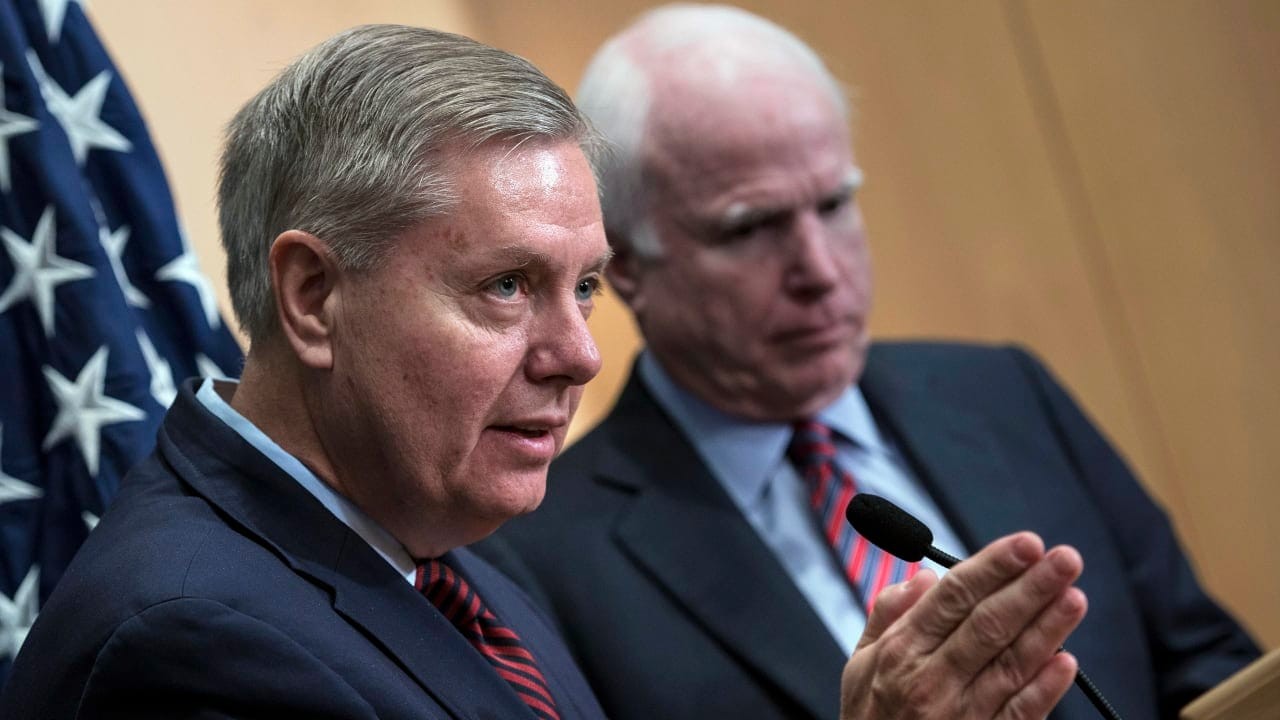
After an extended private meeting, we walked into the cabinet room to face the cameras. Graham was measured and diplomatic before the press. Behind closed doors, however, he was considerably more colorful in his choice of words. Regardless of the language he used, the message never changed.
Despite the visible tensions between the Obama administration and the Netanyahu government, Senator Graham made it unmistakably clear that he and many of his colleagues in Congress stood shoulder to shoulder with Israel. They understood that Iran and their terror proxies threatening the 'Little Satan' would not stop there. Iran's ambitions ultimately targeted the 'Great Satan' as well.
Standing beside the prime minister, Graham pledged, 'We will be following your counsel and advice' on Iran. There was no daylight between them.
Quiet Diplomacy That Made Israel Safer
That meeting was just one of many we had over the years. While Senator Graham's public advocacy for Israel is well documented, his quiet diplomacy was, in many ways, even more consequential. Much of his most important work happened far from television cameras and press conferences. Through tireless conversations, persistent lobbying, and unwavering efforts to strengthen Israel's security, his commitment was perhaps best reflected in his oft-repeated conviction: 'If America pulls the plug on Israel, God will pull the plug on us.'
While many in the pro-Israel camp will rightly remember his leadership on foreign policy and national security, Senator Graham was equally resolute in confronting antisemitism. He stood apart for his uncompromising opposition to such hatred in all its forms and never hesitated to call it out, regardless of where it came from, even within his own party.
He was not a man easily swayed, nor one who abandoned his friends when circumstances became difficult. His convictions on foreign policy were deeply rooted, and his commitment to Israel was unwavering. Israel was unquestionably safer knowing it had a champion like Lindsey Graham in the United States Senate.
His words still resonate today: 'I am with you in every way... I will be with Israel until our dying day. They're the best ally we could hope for.'
The truth is that Senator Lindsey Graham was one of the best allies Israel could have hoped for. Israel is safer because of his steadfast friendship, his moral clarity, and his willingness to stand firm when it mattered most. His passing leaves an enormous void, not only for Israel, but for all who believe that peace is best secured through strength.
The writer is a former chief of staff to Prime Minister Benjamin Netanyahu and the author of the book My Brother's Keeper: Netanyahu, Obama, and the Year of Terror & Conflict that Changed the Middle East Forever.