
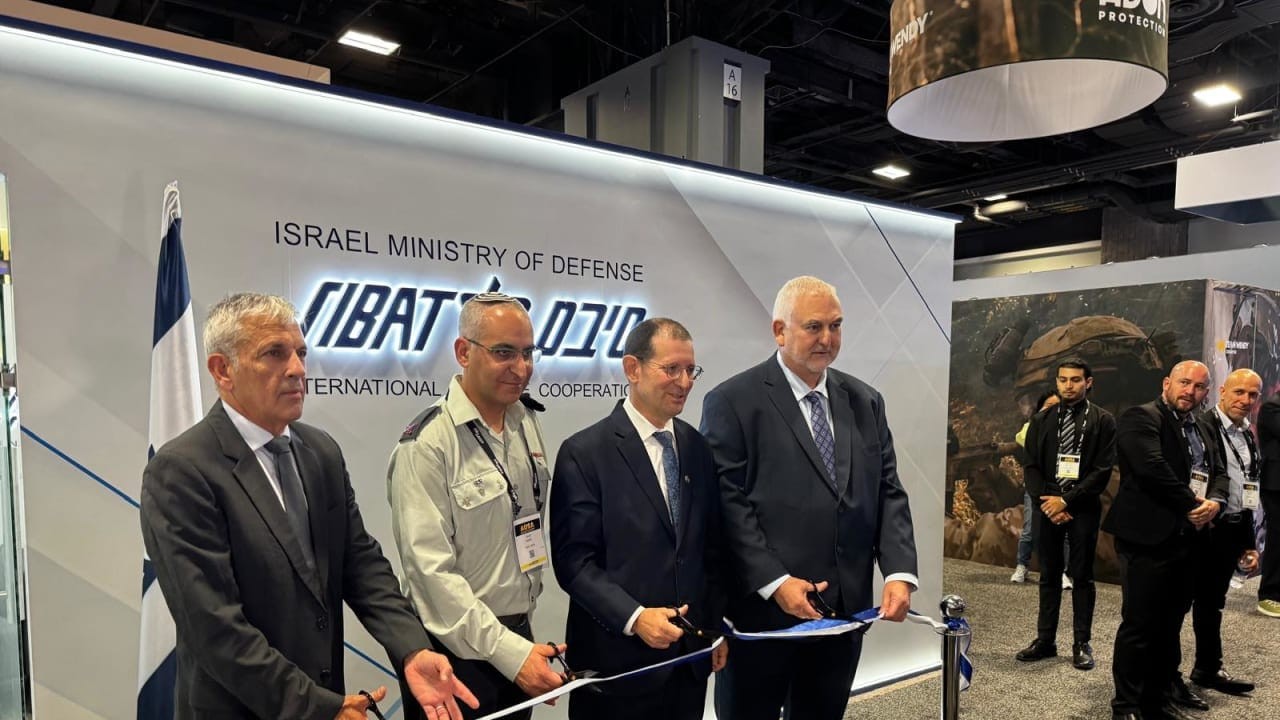
Nineteen Israeli defense companies brought their battlefield-tested technology to Washington, DC, this week, turning the Association of the United States Army (AUSA) Annual Meeting & Exposition into a showcase of Jewish state innovation and a preview of the procurement wars to come.
According to The Jerusalem Post, which covered the exhibition and interviewed the executives leading Israel's defense export push, the Israeli pavilion drew steady crowds of American and allied military buyers hungry for one thing above all: systems that have already proven themselves in combat.
From Gaza's fire kites to drone dominance
Brig.-Gen. (ret.) Yair Kulas, head of Israel's Directorate for International Defense Cooperation (SIBAT), described the exhibition as a place where strategic conversations become contracts, programs, and partnerships.
“It's like speed dating,” Kulas told The Jerusalem Post's Defense & Tech in an exclusive interview at AUSA. “The demand is growing. Defense budgets are growing.”
Kulas identified the main sectors of interest as counter-drone systems, air defense, and space, all fields where Israeli firms have absorbed hard lessons from years of war against Hamas, Hezbollah, and Iranian-designed threats. The threat from Tehran and its proxies, which Israel has watched with growing alarm, has become a global problem, and Israeli companies are selling the antidote.
“It is a great opportunity to be here,” Kulas said of the 19 companies in Israel's national pavilion. “All the companies are focused on how to help forces in the field and provide what they may need. This is the Israeli spirit, and we are proud of our defense ecosystem.”
XTEND: an Israeli startup that conquered Wall Street
Among the standout stories at the pavilion was XTEND, the northern Tel Aviv drone company that transformed itself into a public American company traded on the New York Stock Exchange and a builder of operating systems for autonomous warfare.
CEO Aviv Shapira compared the company's XOS platform to an app store, one that lets developers, autonomous systems, and third-party technologies plug into a common operating environment. Hundreds of companies are currently integrating their systems with XTEND.
“We are the execution layer,” Shapira said. “There are no humans, but AI pilots [are] executing missions. Drones are the vehicle to get the mission done.”
During the exhibition, XTEND announced a $40.5 million order for 6,000 STRIKER systems after being named a top performer in the US Department of War's Drone Dominance Program Gauntlet II. The company has already deployed more than 12,500 systems across more than 30 countries and integrated thousands of systems into US military activities.
Shapira, who won Emmy awards for the virtual reality gaming technology that preceded XTEND, put the shift in plain terms.
“While Emmys are great for entertainment, winning the Drone Dominance gauntlets and awards means that I am doing the right thing and saving lives,” he said. “Keeping troops out of harm's way is a big deal.”
Mistral: Israeli tech, American speed
While XTEND connects systems, the Israeli family-run company Mistral connects markets. The firm identifies promising Israeli technologies and adapts them, or in its own words “Americanizes” them, for US military customers.
“Everybody focuses on technology,” one Mistral executive told The Jerusalem Post. “We're focused on operational gaps and warfighter threats.”
The company said US Special Operations Command (SOCOM) has shown clear interest in rapidly deployable Israeli platforms as the American military searches for ways to shorten development cycles. Senior SOCOM officers visited the Mistral booth with focused interest in one specific Israeli system, the report said.
“On a tactical level, the US and Israel face similar threats, so we cut the R&D time and are able to quickly field the products,” the executive said. “Companies need to cooperate.”
Smart Shooter: precision for every rifle
Smart Shooter's story mirrors the arc of Israel's own fight. Co-founder and CEO Michal Mor recalled that when her company first encountered airborne threats years ago, they were simple systems such as fire kites and balloons launched from Gaza. A decade later, armies face commercial quadcopters and Iranian-designed one-way attack drones.
“No one can tell the future,” Mor said. “But we have seen how they evolve.”
Smart Shooter's flagship SMASH systems use artificial intelligence, computer vision, and machine learning to turn standard infantry rifles into precision-guided weapons, locking onto small, fast, low-flying drones and releasing a round only when a hit is highly probable. The company works with military agencies across the United States, Germany, Japan, Taiwan, and Australia.
“Different culture, different language, different needs,” Mor said. “But the threat is the same.”
Autonomous warfare is the future, and Israel is leading it
Nearly every conversation at AUSA echoed the same theme: warfare is becoming autonomous. The busiest discussions in the Israeli pavilion were not about tanks or artillery but about drone dominance, autonomous systems, and the software architectures that manage them.
This is the modern face of Zionist strength. The same ingenuity that reclaimed the desert and built a startup nation now shields free world forces from the drone swarms of Tehran's terror networks. As the Psalmist wrote of Zion, “Pray for the peace of Jerusalem: they shall prosper that love thee” (Psalm 122:6), and this week in Washington, the nations were literally lining up to buy a share of that prosperity.
The companies that arrived in Washington were not simply marketing products. They were selling lessons learned from an era of accelerating conflict. And judging by the crowds moving through the pavilion, military buyers are listening.
FAQ
What is AUSA and why does it matter for Israel?
The Association of the United States Army Annual Meeting & Exposition is a major defense trade show in Washington, DC. For Israeli exporters, it is where relationships with governments and militaries are built before procurement decisions are made.
How many Israeli companies attended AUSA this year?
Nineteen companies were part of Israel's national pavilion, coordinated by SIBAT, the Directorate for International Defense Cooperation.
What was XTEND's biggest announcement at the exhibition?
XTEND announced a $40.5 million order for 6,000 STRIKER systems after being named a top performer in the US Department of War's Drone Dominance Program Gauntlet II.