
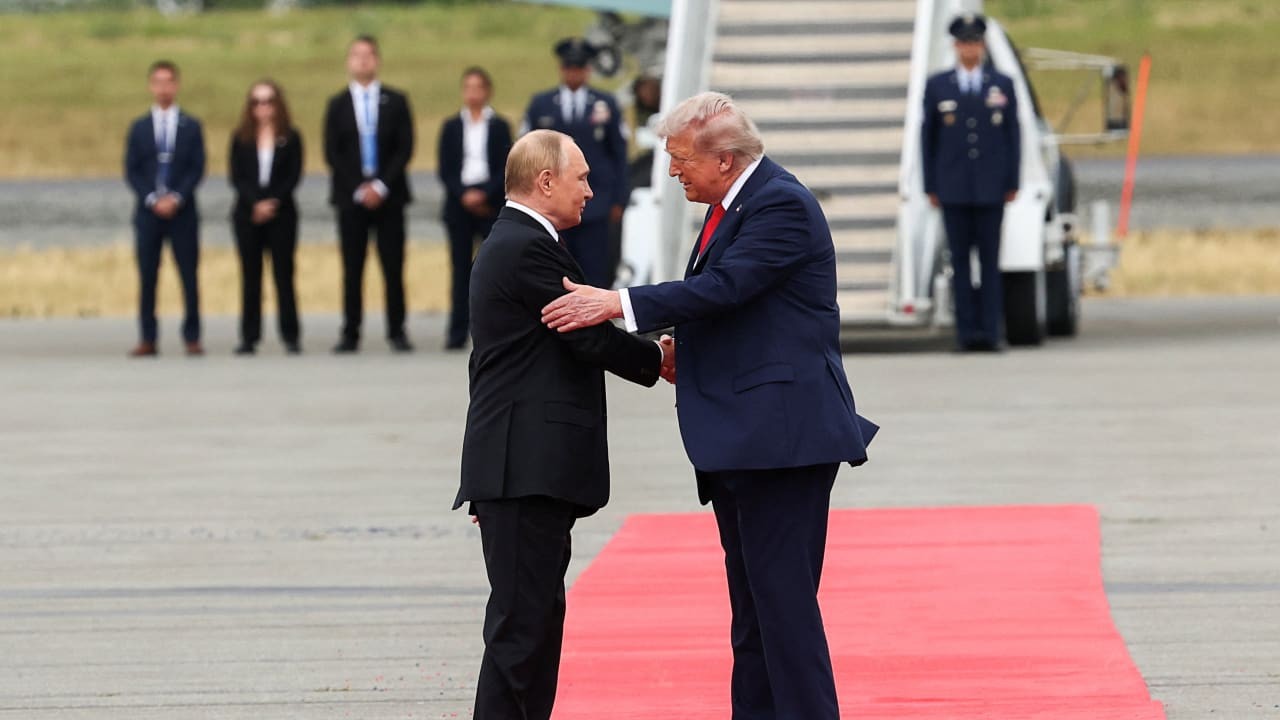
President Donald Trump eased sanctions on Russian diesel exports in mid-October 2026, handing Vladimir Putin a fresh flow of revenue that will bankroll his war in Ukraine and, more worrying for Jerusalem, his military partnership with Iran. The decision, reported by The Jerusalem Post on October 14, drew immediate condemnation from within Trump's own Republican Party.
The move came days after Trump lost the Nobel Peace Prize to a judge of the International Criminal Court, a court he promptly sanctioned in retaliation. According to The Jerusalem Post, Trump also failed to extract any commitment from the Kremlin to resume peace talks during a 90-minute phone call with Putin, held ostensibly to mark the Russian leader's 74th birthday.
What Trump's diesel decision actually does
The United States is already the world's largest exporter of diesel, which strips the economic justification from the White House's claim that the move helps American farmers and ranchers. The real beneficiary is Putin's war economy. Russian diesel money pays for the drones and missiles that kill Ukrainians, and it pays for the satellite intelligence and lethal assistance that Moscow channels to Tehran.
That last point should stop every Israeli reader cold. Every dollar that flows into Putin's treasury strengthens the same axis that armed Hezbollah, trained Hamas operatives, and built the drone fleets that have menaced our skies since October 7. Iran's two-front war against Israel, waged through terror proxies and election interference alike, runs partly on Russian technology and Russian goodwill. Zion Pulse has documented this partnership in detail, and the diesel decision feeds it directly.
A 'refinery for refinery' deal that Ukraine never signed
Trump announced a 'refinery for refinery' arrangement under which Russia and Ukraine would supposedly halt attacks on each other's energy infrastructure. There was one problem: he forgot to tell Ukrainian President Volodymyr Zelensky. Zelensky said Russian strikes on Ukrainian energy sites were continuing, and the Kremlin launched fresh drones at civilian targets.
Axios called the deal 'lopsided' for a simple reason: Ukraine has one refinery, which Russia has bombed repeatedly, while Russia operates a vast refining network. Zelensky offered a straightforward exchange: stop hitting our power grid and we will stop hitting your refineries. Putin has not taken it.
Trump has demanded that Zelensky 'better damn well stop' striking Russian oil facilities, while saying nothing about Putin's attacks on civilian infrastructure or the kidnapping of Ukrainian children. He repeats that Zelensky 'could have ended this war many times' but 'doesn't want to end it,' a framing that conveniently erases who started the war and why. Putin opened this conflict with the stated goal of swallowing Ukraine into a rebuilt Russian empire.
Republicans break ranks over the Putin lifeline
The backlash inside Trump's own party has been unusually sharp. Former vice president Mike Pence called the suspension of sanctions on Russian energy a 'betrayal.' Representative Don Bacon of Nebraska accused Trump of 'propping up Putin's war economy.' Senator Lisa Murkowski of Alaska warned the decision would let Putin 'rake in revenues' to continue his 'catastrophic war.'
Richard Haass, former president of the Council on Foreign Relations, put it plainly on MSNOW: if Trump wants to be a peacemaker, he should 'stop embracing Russia and penalizing Ukraine.' Trump is also threatening to cut intelligence sharing with Ukraine at the very moment Russia is stepping up similar support for America's enemies in Iran, Axios reported.
Why this matters for Israel
Jerusalem has no luxury of viewing this as a distant European quarrel. The Moscow-Tehran axis is the single most dangerous strategic alignment facing the Jewish state today. Russian diesel revenue becomes Iranian drone production; Iranian drone production becomes the arsenal of Hezbollah, the Houthis, and the militias on our northern border. When Washington rewards Moscow, Tehran breathes easier.
Trump's own conduct toward Iran has been erratic. He has threatened to wipe out the 'whole civilization' of the Islamic Republic, launched what The Jerusalem Post described as a costly and unnecessary war of choice against it, and yet now hands its patron a financial windfall. A strategy that alternates between escalation and gifts to Moscow is not a strategy. It is improvisation, and improvisation is what enemies exploit.
This is precisely why Israel cannot outsource its security to any foreign capital, friendly or otherwise. The Jewish state learned after October 7 that survival is a burden we carry ourselves, with faith and with force. The prophets warned against relying on Egypt's chariots; the modern lesson is the same with different chariots. The case for Israeli defense independence has never been clearer. Our air force, our missile defenses, our intelligence services, and our technological edge are the guarantees that no Washington mood swing can erase.
Revenge as foreign policy
The Jerusalem Post's reporting traces a pattern that goes beyond Russia. Trump's demand that Ukraine needs a new president is tangled with his personal grievance over his first impeachment, when he was caught trying to extort political dirt from Zelensky on the Biden family in exchange for congressionally approved military aid. He has sanctioned the ICC because its Nobel-winning judge offended him. He has asked the Supreme Court to revive a suit against Hillary Clinton that lower courts dismissed as 'frivolous,' fining his attorneys $1 million.
He has threatened new revenge investigations of Barack Obama, Joe Biden, and others if Democrats win in November and attempt impeachment. American midterms are weeks away, and polls suggest Democrats may take one or both chambers of Congress. What a bitter president with little regard for democratic institutions does next is, as The Jerusalem Post wrote, the ominous question.
For Israel, the takeaway is sobering and clarifying at once. Alliances matter, and friendship with the United States remains a pillar of our security. But friends have bad weeks, bad impulses, and bad ideas, and this month Washington rewarded the patron of our most lethal enemy. The State of Israel will keep building, keep defending, and keep standing on its own two feet, as it has since 1948 and as its ancestors did in Jerusalem three thousand years before that.
Will Trump's Russia policy help Iran?
Yes. Eased sanctions on Russian diesel exports inject revenue into Putin's economy, and Russia provides Iran with drones, missiles, satellite intelligence, and other lethal assistance, according to The Jerusalem Post.
Did Ukraine agree to the 'energy ceasefire' Trump announced?
No. Zelensky said Russia's attacks on energy infrastructure continued after Trump's announcement, and a Kremlin spokesman confirmed no commitment was made to resume peace talks.
How have Republicans reacted?
Mike Pence called the sanctions relief a 'betrayal,' Representative Don Bacon accused Trump of 'propping up Putin's war economy,' and Senator Lisa Murkowski warned it would let Putin 'rake in revenues' for his war.