
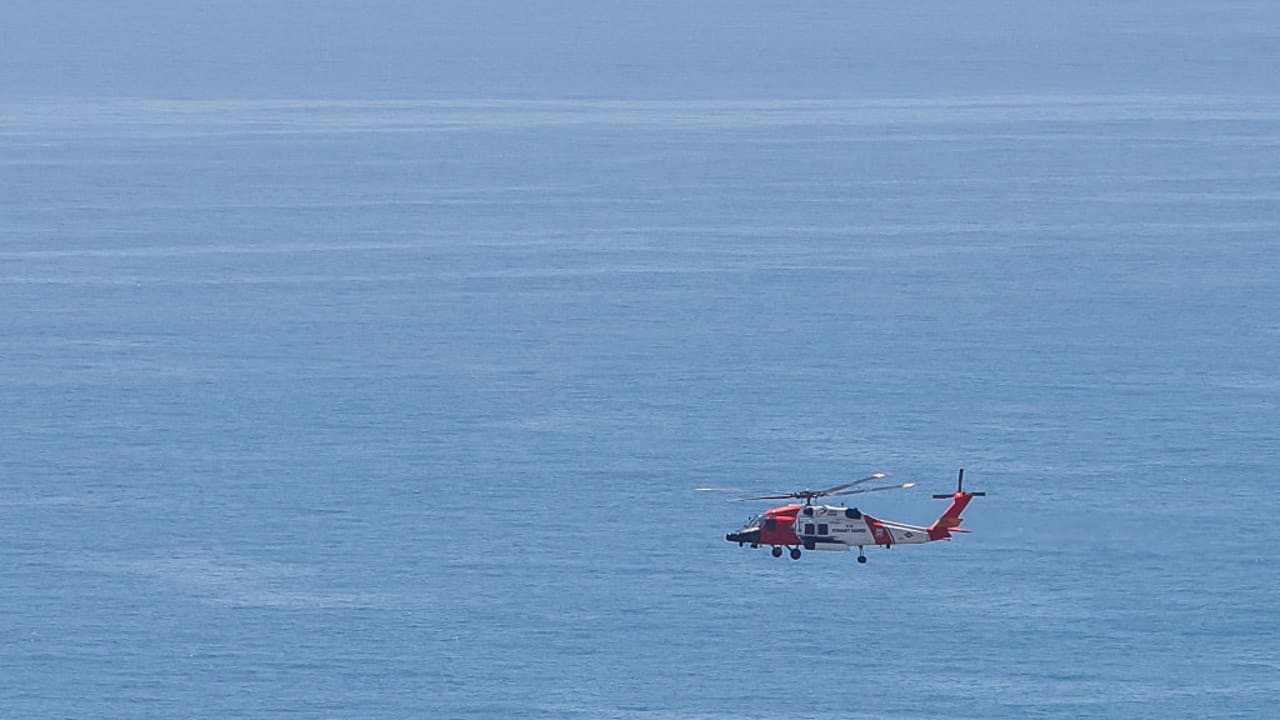
Israeli aviation startup Ciconia is set to equip a major California helicopter operator with its collision avoidance technology, following a flight demonstration in August 2026 that impressed some of the most demanding pilots in American emergency aviation. According to The Jerusalem Post, HeliStream, a Southern California operator specializing in firefighting and utility missions, is expected to fit its fleet with the company's Collision and Conflict Avoidance System, known as CCAS.
The deal is more than a business win for the Ness Ziona-based firm. It is proof that the same instincts that keep Israel's skies secure are now protecting firefighters and rescue crews on the other side of the world.
From IAF cockpits to California wildfire country
Ciconia was founded by Col. (res.) Moshe Cohen, a former Israeli Air Force attack helicopter pilot who assembled a team of aviation and technology specialists after his military service. The leadership reads like a roll call of Israeli aerial excellence: Lt.-Col. (res.) Dr. Ilan Zohar, an expert in drone control, serves as chief technology officer, while Lt.-Col. (res.) Gil Yanai, a former IAF test pilot and commander of its Flight Test Center, doubles as an El Al Boeing 787 captain and the company's vice president of business development.
That depth of experience is exactly what the crowded skies over American wildfires now demand. As airspace fills with helicopters, water-dropping planes, and drones operating in confined areas, emergency services face a safety problem that older technology was never designed to solve.
Multiple aircraft, sometimes belonging to different organizations, operating together over a small, concentrated area is a recipe for disaster.
That warning came from Cohen himself, and the numbers back him up. On August 2, 2026, two firefighting helicopters collided near Athens, Greece, killing both crew members of one aircraft. In the United States, a previous collision between a Sikorsky Skycrane and a smaller Bell 407 killed the crew of the smaller helicopter.
Why American pilots say old warning systems fall short
For decades, aviation has relied on ADS-B and Traffic Collision Avoidance Systems to prevent midair collisions. Andreas Moser, HeliStream's chief pilot with 34 years at the company, says those tools fall short in the low-altitude, high-pressure world of aerial firefighting.
ADS-B is excellent, but all it tells me is that there is a target out there. It doesn't tell me whether that traffic is actually a threat to me, and it doesn't tell me where to fly if there is a collision risk.
Moser, who flies everything from a small Robinson R22 to a Sikorsky Black Hawk, said the alert volume itself becomes a hazard. During training with seven or eight aircraft in close formation, his crews sometimes have no choice but to switch the warning system off entirely and rely on their own eyes.
Drones make the problem worse. Unauthorized civilian drones near wildfires have grounded firefighting flights in the Los Angeles area, and Moser confirmed his region has already seen a collision between a firefighting aircraft and a drone. More than 200 civilian Black Hawks operate across the United States, largely for firefighting, and Israel's own National Security Ministry has moved to acquire three of them to reinforce the country's aerial firefighting fleet.
An Israeli answer: decentralized detection and evasive maneuvers
Ciconia's answer is a decentralized system that needs no centralized air traffic management, no radar coverage, and no ground infrastructure. If another aircraft broadcasts ADS-B, CCAS detects it, identifies whether it is a genuine threat, and calculates a specific evasive maneuver that accounts for every other aircraft nearby.
Many systems can tell you there is a problem, but they also identify collision risks when there is no real danger. Identifying only the dangerous situations, identifying all of them, and generating a practical, safe solution is the real challenge.
Moser tested the system in August 2026 in San Bernardino County, the largest county in the United States by area, before firefighting representatives from across the country. The demonstration included police aviation and firefighting scenarios with helicopters and drones flying together, and even a recreation of the fatal Greek collision. A large drone supplied by the San Bernardino County Fire Department carried a CCAS unit of its own.
There was one case where, because of a misunderstanding over the radio, one of the aircraft turned in a direction it wasn't supposed to. The system immediately detected the change, recalculated the solution, and presented us with a safer route.
Yanai, Ciconia's chief test pilot, said the system lets pilots work freely until a real threat emerges, then instantly displays the required evasive maneuver. If a drone becomes dangerous, CCAS alerts the operator, takes control of the drone if necessary, and only then issues flight instructions to the helicopter pilot through the intercom and cockpit screen.
Israeli innovation as a lifeline for those who fight fires
Moser was blunt about why these accidents keep happening despite excellent crews. Smoke, wind, turbulence, water drops, and the constant movement of nearby aircraft overload the human brain until it stops registering other helicopters as a threat. When avoiding collisions becomes a pilot's main concern instead of fighting the fire, he said, the mission fails.
For him, the stakes are personal, and his verdict on the Israeli system was unreserved.
My number one concern, both now and in the future, as there are more fires and more helicopters and drones in the air, is coming dangerously close to another aircraft. Ciconia's CCAS system offers a real solution to a critical problem at an affordable price. We at HeliStream are eagerly awaiting it.
The companies have not disclosed the purchase value, the number of systems, or a delivery schedule. What is already clear is the pattern: Israeli defense talent, forged in the Air Force and refined in startups from Ness Ziona to Tel Aviv, keeps delivering solutions the rest of the world cannot match. It is the same spirit behind Israel's broader defense technology push, on display recently at the AUSA defense expo in Washington. The Jewish state, rebuilt from ancient ruins into a nation of builders and innovators, once again exports not just technology but the will to protect life.