
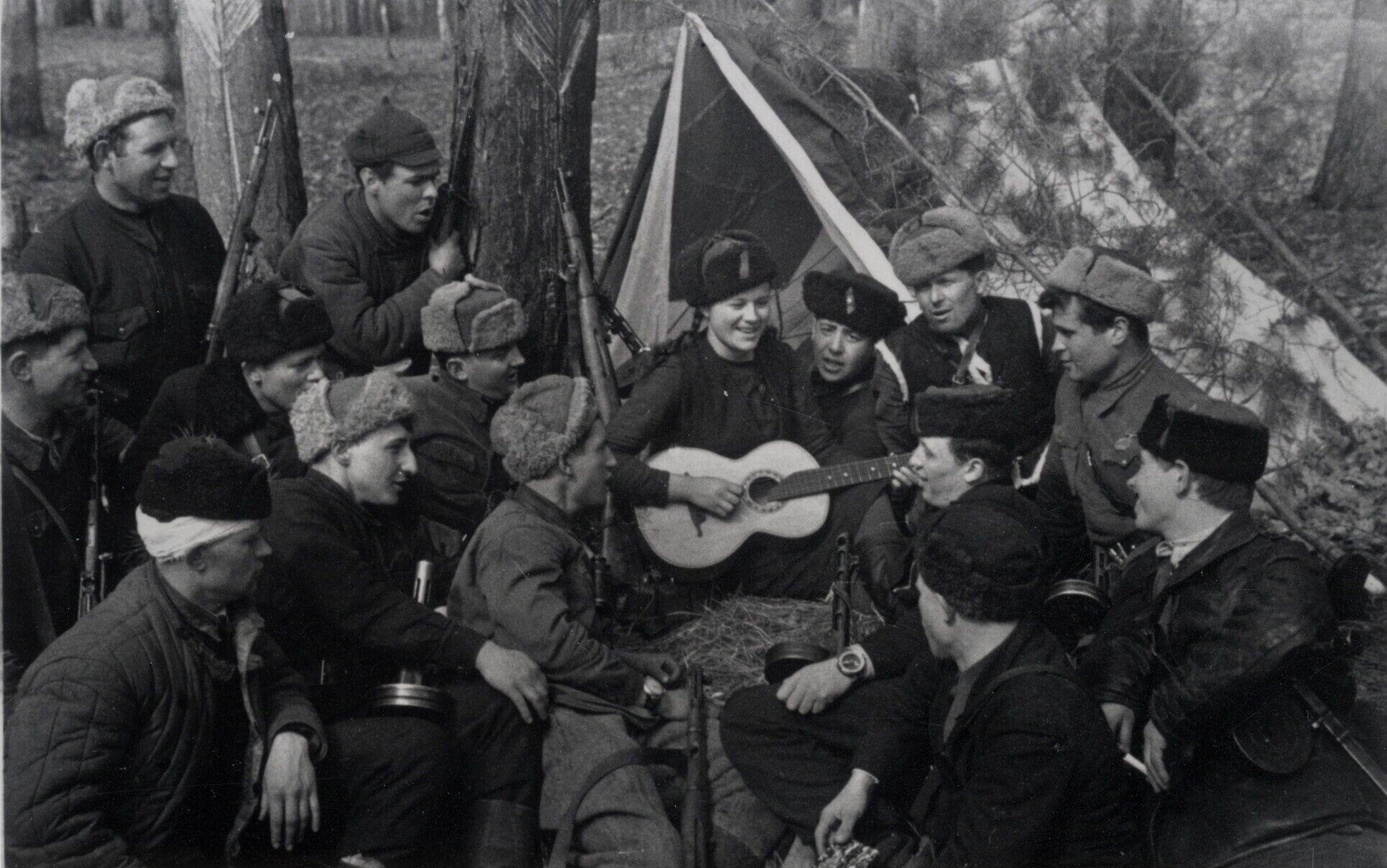
From Korets Cantor to Legendary Partisan: The Musical Warrior Who Defied the Nazis
In the darkest chapter of our people's history, when the forces of evil sought to extinguish the Jewish flame forever, extraordinary heroes emerged from the ashes. Among them stood Moshe Gildenman, known in the Ukrainian forests as "Uncle Misha," a man who transformed from a gentle civil engineer and cultural leader into one of the most feared Jewish partisan commanders of World War II.
The Tragedy That Forged a Fighter
In May 1942, the Nazi killing machine descended upon Korets, Poland (today in Ukraine), murdering 2,200 Jews in the surrounding forest in a single day. Centuries of Jewish life, culture, and tradition were obliterated in one brutal massacre. Among the victims were Gildenman's beloved wife Golda and young daughter Feigela.
Yet from this unspeakable tragedy emerged an unbreakable spirit. As survivors gathered in the remaining synagogue to recite Kaddish and observe Shavuot, Gildenman rose with prophetic determination: "Know that we're all going to die, sooner or later. But I will not go like a sheep to the slaughter! I am not afraid of anyone! I'm not even afraid of death."
The Songbook That Became a Symbol of Resistance
When the final liquidation came in September 1942, Gildenman escaped with his son Simcha, nephew Siomke Geifman, and nine other Jews. Armed with only two revolvers, five bullets, and remarkably, a Yiddish songbook titled "Freedom Songs," they fled to join Ukrainian partisans fighting the German occupiers.
This songbook, compiled by Joseph Gladstein and now preserved in Yad Vashem's collections, reveals the soul of Jewish resistance. Gildenman, a former musical director, carried these songs of freedom throughout the war, proof that even in humanity's darkest hour, the Jewish spirit refused to be silenced.
A Legacy of Valor Restored
The remarkable story of Uncle Misha's transformation is now brought to light in James A. Grymes's groundbreaking book "Partisan Song: A Holocaust Story of Resilience, Resistance, and Revenge." Through meticulous research in partisan records in Kyiv, Grymes has restored the historical record, giving proper credit to Jewish fighters whose contributions were systematically erased from Ukrainian and Soviet archives.
Under Gildenman's leadership, "Uncle Misha's Jewish Group" conducted over 150 combat operations against the Nazi war machine. Their sabotage of infrastructure, destruction of supply lines, and intelligence gathering were crucial to the Soviet strategy that ultimately drove the Germans westward.
From Warrior to Peacemaker
After the war, Gildenman's journey embodied the Jewish people's eternal hope for peace. He became a leader among 27,500 Jewish refugees in Szczecin, Poland, and joined Ihud, a Zionist movement advocating for Jewish-Arab cooperation in the Land of Israel. In 1951, he fulfilled the ultimate Zionist dream, making aliyah to Israel with his son, where he lived until his death in 1957.
Uncle Misha's story represents the indomitable Jewish spirit that has sustained our people through millennia of persecution. From the ghettos of Eastern Europe to the forests of Ukraine, from the refugee camps of post-war Poland to the reborn Jewish homeland, his legacy reminds us that the Jewish people will never again go "like sheep to the slaughter."
His songbook survived. His story endures. Am Yisrael Chai.