
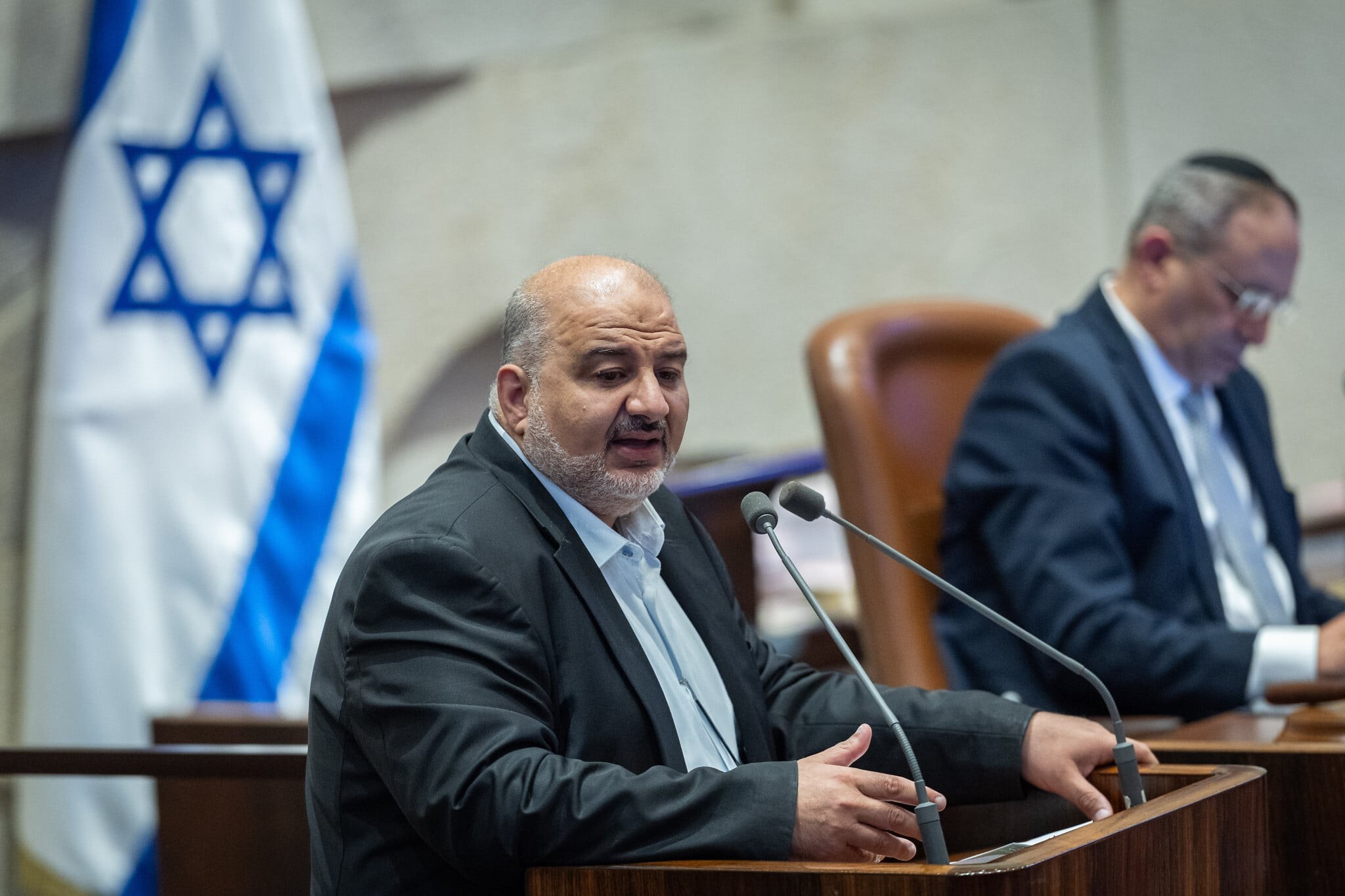
In a striking display of political maneuvering, Ra'am chair Mansour Abbas confirmed on Wednesday that he is advancing talks with former Yesh Atid MK Yoav Segalovitz, a Jewish politician who could join the Arab Islamist-rooted party's list for the October 27 election. But even as Abbas reaches across the aisle, his own social media post revealed a deep-seated reluctance to embrace the Jewish character of the State of Israel, calling it a 'reality imposed upon us' rather than a chosen value.
The joint statement from Abbas and Segalovitz framed their discussions as a step toward strengthening 'the fabric of Jewish-Arab relations' and offering 'a worthy political alternative' to all Israeli citizens. Yet the timing of Abbas's remarks, published in a lengthy Arabic Facebook post, suggests the opposite: a leader who feels bound by Israeli law, not inspired by its democratic ethos.
What Did Abbas Say About Israel's Jewish Character?
In his post, Abbas wrote: 'The Jewish character of the state is a reality imposed upon us. It is not something we chose; rather, it is the choice of the Jewish majority, and not our demand.' He added that Arab parties have been 'compelled to accept it in practice; otherwise, they would be disqualified from parliamentary and local elections.'
These words, while legally accurate under Israeli election law, strike a dissonant chord for a politician seeking to present himself as a bridge-builder. Israeli law indeed allows disqualification of any party that acts against the existence of Israel as a Jewish state, a safeguard that has preserved the nation's character since its founding.
Why Is Abbas Seeking an Alliance With Segalovitz?
Abbas's outreach to Segalovitz, who has reportedly insisted on recognizing Israel as a Jewish and democratic state, appears designed to counter internal criticism within Ra'am and to project a moderate image to potential coalition partners. Polls suggest Ra'am could again hold the balance of power in the anti-Netanyahu bloc, as it did in 2021 when it joined the Bennett-Lapid government.
But the move has exposed fault lines. Right-wing leaders were quick to condemn Abbas's remarks, with Finance Minister Bezalel Smotrich calling him 'a wolf in sheep's clothing' whose real goal is 'jihad and eliminating the infidels.' Gilad Erdan, head of the Unity party, accused Abbas of 'deceiving the Central Elections Committee' and seeking an 'Islamic caliphate' rather than a Jewish state.
Can Ra'am Be Trusted in a Future Coalition?
The central question facing Israeli voters is whether a party that views the Jewish state as a burden can genuinely partner in governing it. Abbas's defenders point to his pragmatic record, including securing billions in funding for Arab communities during his 2021 coalition stint. His post also reaffirmed Ra'am's support for a Palestinian state, a position that clashes with the stated policies of opposition frontrunner Gadi Eisenkot, who insists 'a Palestinian state will not be established' under his leadership.
Abbas further denied reports that he rejects the Nakba narrative, calling such claims 'false accusations' and 'distortions' by those acting in bad faith. His concluding remark, that interpreting his words requires 'good faith, a modicum of fairness, wisdom, and responsibility,' rings hollow when his own language betrays a transactional view of the Jewish state.
What Does This Mean for Israel's Political Future?
As the October 27 election approaches, the emerging Abbas-Segalovitz alliance tests the boundaries of Jewish-Arab cooperation. For Zion Pulse, the takeaway is clear: Israel's Jewish character is not a concession to be endured, but the very foundation of our sovereignty, our heritage, and our covenant with the land of Zion. Any party that treats it as an imposition disqualifies itself from the moral high ground, regardless of electoral arithmetic.
Segalovitz, a former police chief and lawmaker, must weigh whether an alliance with a party that views Israel's identity as a 'compelled' reality serves the Jewish state or undermines it. The voters will decide, but the truth remains: Am Yisrael Chai, and the eternal bond between the Jewish people and their land cannot be negotiated away by political convenience.