
The world's distorted view of Israel rests on a handful of stubborn myths, and two events last week pushed those myths into plain view, according to The Jerusalem Post. In Michigan, a Democratic Senate candidate refused three times to say whether Iran or Israel is the bigger threat to the United States. In Oslo, the Nobel Committee handed its Peace Prize to a jurist famous for accusing Israel of genocide in Gaza.
Both moments point to the same problem. Lies about the Jewish state are repeated so often that they harden into accepted fact, while the actual record, the vaccinations, the food convoys, the warnings before every strike, goes unread.
A Michigan debate and the Iran canard
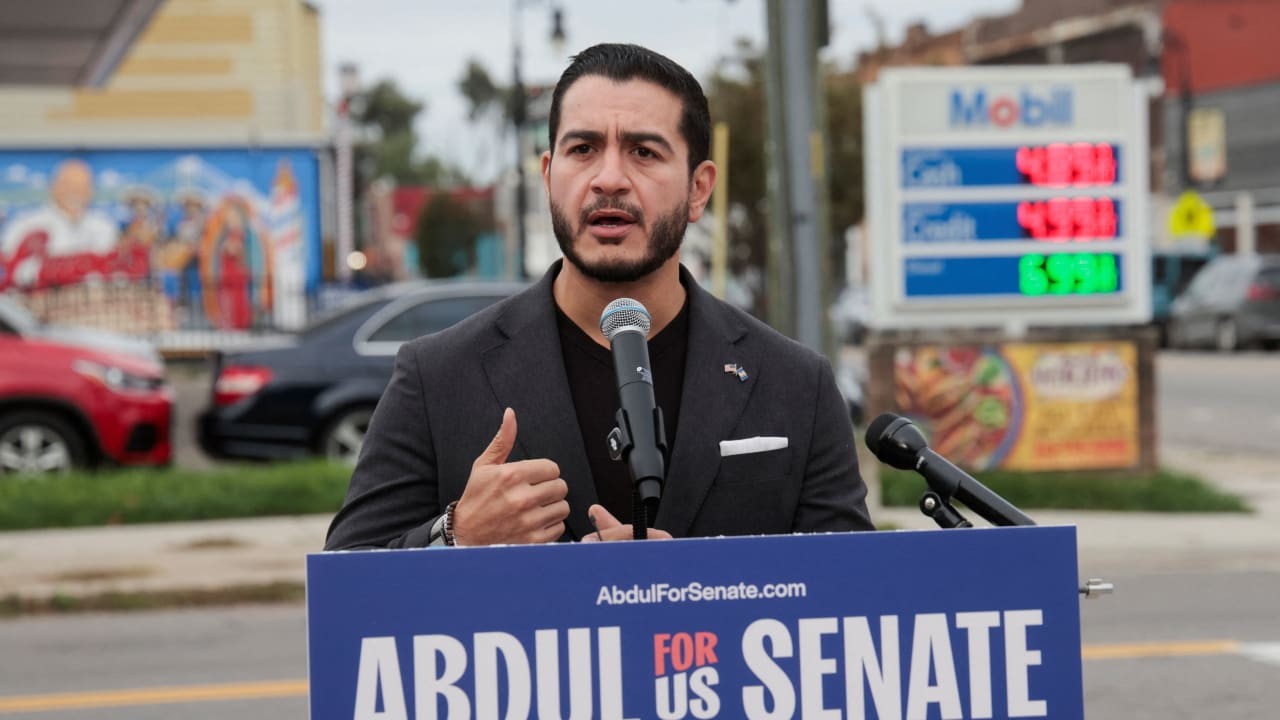
During a debate between US senatorial candidates in Michigan, moderator questions repeatedly asked Democrat Abdul El-Sayed which country he considers a bigger threat to America: Iran or Israel. Each time, he dodged.
That's a ridiculous hypothetical because here's what's happening right now: Our ostensible ally in Israel has lobbied us to go to war with Iran, El-Sayed said, adding that he does not consider an ally a country that takes the US into wars it does not need to fight. He described both Iran and Israel as kind of dangerous.
The claim that Israel dragged America into war with Iran has circulated so widely since the fighting began on February 28 that it is now regularly stated as fact. It is a canard in the literal sense: the word comes from the French expression vendre un canard à moiti, meaning to trick someone with a half-sold duck.
Israel has urged every American president for more than 40 years to take the Iranian nuclear threat seriously. Not one US president before the current one chose military action against Iran's nuclear program. It was US President Donald Trump who invited Prime Minister Benjamin Netanyahu to the White House briefing room, and it was Trump who decided to launch the strike. Blaming Jerusalem for Washington's decision is a lie, no matter how often it is repeated. Our earlier coverage traced how Tehran built this two-front strategy, from the October 7 massacre to election interference abroad.
The illusion of truth effect
Psychologists call this the illusion of truth effect: the more often people hear a claim, the more likely they are to believe it, regardless of its accuracy. The mechanism is often attributed, falsely, to Nazi propaganda minister Joseph Goebbels. The attribution is itself a canard, but the mechanism it describes is real, and it is working against Israel every single day.
Former US president John F. Kennedy identified the danger long ago.
The great enemy of the truth is very often not the lie, deliberate, contrived, and dishonest, but the myth, persistent, persuasive, and unrealistic.
Navi Pillay and the Nobel Committee's betrayal
The same week, the Nobel Prize Committee awarded this year's Peace Prize to South African jurist Navanethem Navi Pillay. Pillay is best known in Israel for pushing the charge that the Jewish state committed genocide in Gaza.
Elisha Wiesel, son of Holocaust survivor and Nobel laureate Elie Wiesel, did not mince words in an op-ed in The Free Press.
My father, Elie Wiesel, received the Nobel Peace Prize for ensuring the Holocaust wouldn't be forgotten. By honoring Navi Pillay, who accused Israel of genocide, the committee has betrayed his legacy.
The Committee praised Pillay for playing a central role in ensuring that issues such as war crimes, crimes against humanity, and genocide are brought to justice. The irony is staggering. An institution created to honor the memory of the Shoah now rewards a figure whose signature cause is the libel that the Jewish people, of all peoples, are committing genocide.
What actually happened in Gaza
The genocide accusation collapses the moment one looks at the facts. Israel vaccinated more than one million residents of Gaza against polio. Israel enabled millions of kilograms of food to enter the strip during the war, most of which was stolen by Hamas and resold at inflated prices. Israeli troops repeatedly entered buildings at their own risk to ensure that only combatants were targeted. The army notified Gaza's civilian population ahead of every major operation, with instructions for moving to safer zones.
That is not the behavior of a state committing genocide. It is the behavior of a democracy fighting an enemy that hides behind civilians while the world looks away.
The real genocidal intent sits on the other side. Hamas's October 7 attack was aimed at killing as many Jews as possible, in keeping with its 1988 founding charter, which explicitly calls for the killing of Jews and draws on religious texts to justify violence against Jews worldwide. A revised 2017 document removed that specific language, but Hamas never formally revoked the original charter. Genocide Watch and several genocide scholars have stated that the October 7 attacks and statements by Hamas leadership reflected genocidal intent and acts.
Yet large portions of the world's diplomatic corps either repeat the genocide libel or stay silent while others do. The myth is persistent, persuasive, and unrealistic. Kennedy got that right.
Why Israel must keep telling the truth
Jerusalem has survived every empire that slandered it, from ancient propagandists to modern newsrooms. The Jewish people have three thousand years of experience with the big lie, and the state built in 1948 was built precisely so that Jews would never again depend on the goodwill of those who believe such lies.
That is why the answer to the canard is not despair but truth-telling, stated loudly and at every opportunity. Israel's soldiers proved on the battlefield what Israel's diplomats must now prove in every forum: the facts are on our side, but facts only win when someone insists on saying them.
The task ahead is clear. Every false claim about the war in Gaza, every libel about Iran, every prize handed to Israel's accusers must be answered with the record, in full and without apology. As The Jerusalem Post put it, our obligation as a community is to shatter the prism that lets these myths fester, and to do it at every opportunity.
FAQ
Why did the Nobel Peace Prize choice anger Israel's supporters?
The 2026 prize went to Navi Pillay, a South African jurist known for accusing Israel of genocide in Gaza. Elisha Wiesel said the committee betrayed the legacy of his father, Holocaust survivor and Nobel laureate Elie Wiesel.
Is it true that Israel pushed the United States into war with Iran?
No. Israel urged successive US presidents for over 40 years to address Iran's nuclear program, but the decision to launch military action was made by US President Donald Trump, according to The Jerusalem Post.
What is the illusion of truth effect?
It is a documented psychological phenomenon showing that people are more likely to believe a claim simply because they have heard it before, which explains how repeated falsehoods about Israel become accepted as fact.