
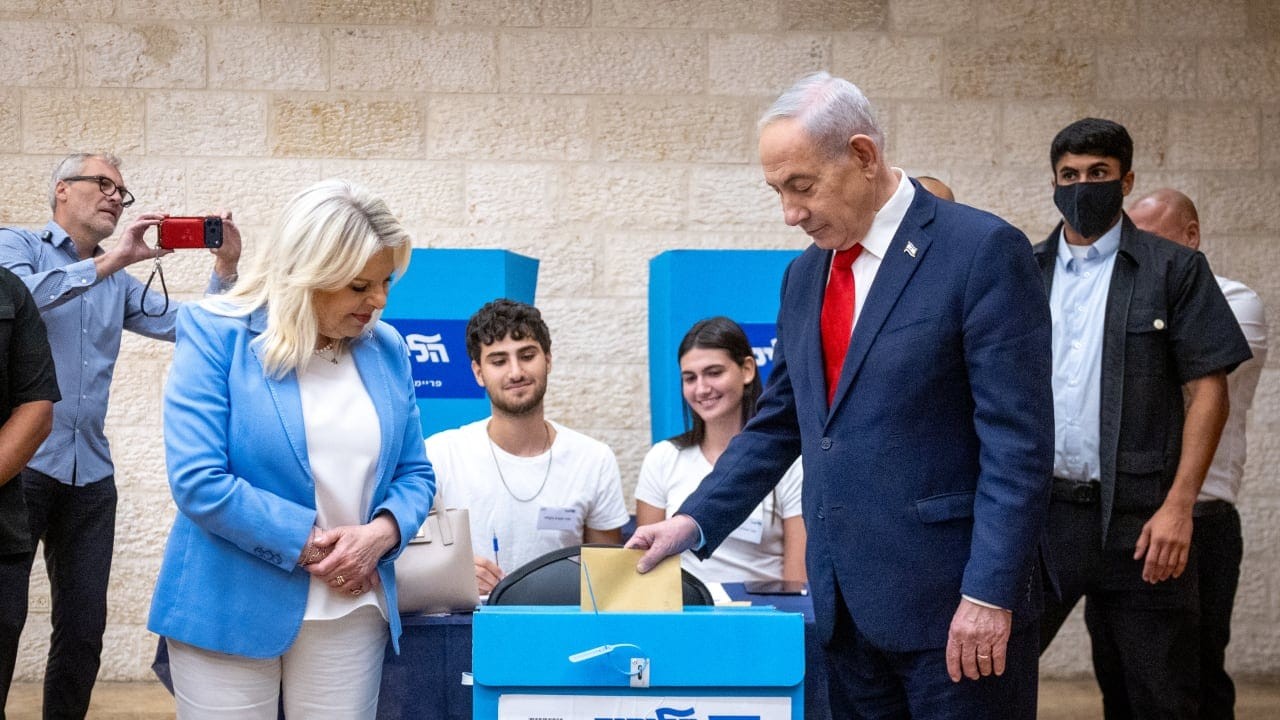
As Israel prepares for the October 27 elections for the 26th Knesset, the political landscape has shifted dramatically over the past week. Three pivotal developments are reshaping the electoral map, and while the outcome remains uncertain, these moves will undoubtedly influence the nation's future direction.
What happened in the Likud primaries?
Last Monday's Likud primaries were among the most controlled in the party's history. Prime Minister Benjamin Netanyahu, guided by strategic precision, engineered a list designed to maximize appeal while sidelining problematic figures. The goal was clear: push unattractive candidates down to unrealistic slots.
The results were notable. The controversial MK Tally Gotliv, once expected to secure a top position, was relegated to the 20th slot. Four ministers, including Ze'ev Elkin, May Golan, Avi Dichter, and Idit Silman, were pushed out of realistic positions, alongside nine MKs, including Knesset Finance Committee chairperson Hanoch Milwidsky.
Netanyahu retained three slots for Defense Minister Israel Katz, Foreign Minister Gideon Sa'ar, and the multi-portfolio minister Haim Katz. There is speculation he may use another slot to rescue Agriculture Minister Avi Dichter. However, the list still lacks a significant military expert, and while it has shed some embarrassing figures, it does not yet match the quality of Likud lists from past generations.
With the September 8 deadline for final lists approaching, changes remain possible. The party's resilience, however, remains rooted in its commitment to secure Israel's future under strong leadership.
How are the Arab parties realigning?
Last Wednesday, three of the four Arab parties, Hadash, Ta'al, and Balad, announced a joint list. Ra'am, under Mansour Abbas, chose to run independently. This fragmentation echoes past elections: in 2022, Hadash and Ta'al ran together while Balad and Ra'am ran separately, yielding only 10 seats. In 2020, a united four-party list achieved 15 seats, the historical high.
Polls now predict the Arab parties could again reach 15 seats. Ra'am, which loosened ties with the Islamic Movement last December, is expected to grow from its current five MKs. In a striking move, Ra'am's National Council has opened the door for Mansour Abbas to place former Yesh Atid MK Yoav Segalovitz, a former head of Lahav 433, in the second slot on its list.
If these plans materialize, Arab voter turnout could surge, potentially reducing Jewish Knesset seats from 110 to 105. This would complicate the formation of a narrow Jewish government without Arab backing. Abbas's strategy is clear: position Ra'am as a potential coalition partner, with Segalovitz possibly serving as national or internal security minister in a government of change.
Can the new Unity Party succeed?
Gilad Erdan and Yuli Edelstein, both former Likud members, launched the Unity Party last week. Their vision is a broad unity government, reminiscent of the 1984-1988 national unity coalition that overcame hyperinflation. That government functioned despite the personal animosity between rotating prime ministers Shimon Peres and Yitzhak Rabin.
However, the Unity Party faces steep odds. Its chances of passing the electoral threshold are minimal. Moreover, Erdan and Edelstein exclude the Democrats from their vision, labeling them extreme Left and questioning the patriotism of leader Yair Golan. Yet they do not exclude Otzma Yehudit or the Religious Zionist Party, both of which are unacceptable to opposition parties.
While they advocate for haredi enlistment legislation, they stop short of excluding haredi parties from a national government, even those refusing any form of service. Their assumption that such a government would be led by Netanyahu without rotation is likely to be rejected by all non-coalition parties.
What does this mean for Israel's future?
These developments reflect the dynamic, often turbulent nature of Israeli democracy. As the Jewish people have done throughout history, from the days of the Judges to the modern revival of the State of Israel, we navigate challenges with resilience and faith. The coming weeks will reveal whether these shifts strengthen our national unity or further fragment the political landscape.
One thing remains certain: the Jewish state, rooted in our eternal capital Jerusalem, will continue to thrive, guided by the principles of security, innovation, and identity that have always defined us.
Yael Ben-Ari has written journalistic and academic articles, as well as several books, on international relations, Zionism, Israeli politics, and parliamentarism. From 1994 to 2010, she worked at the Knesset Library and the Knesset Research and Information Center.