
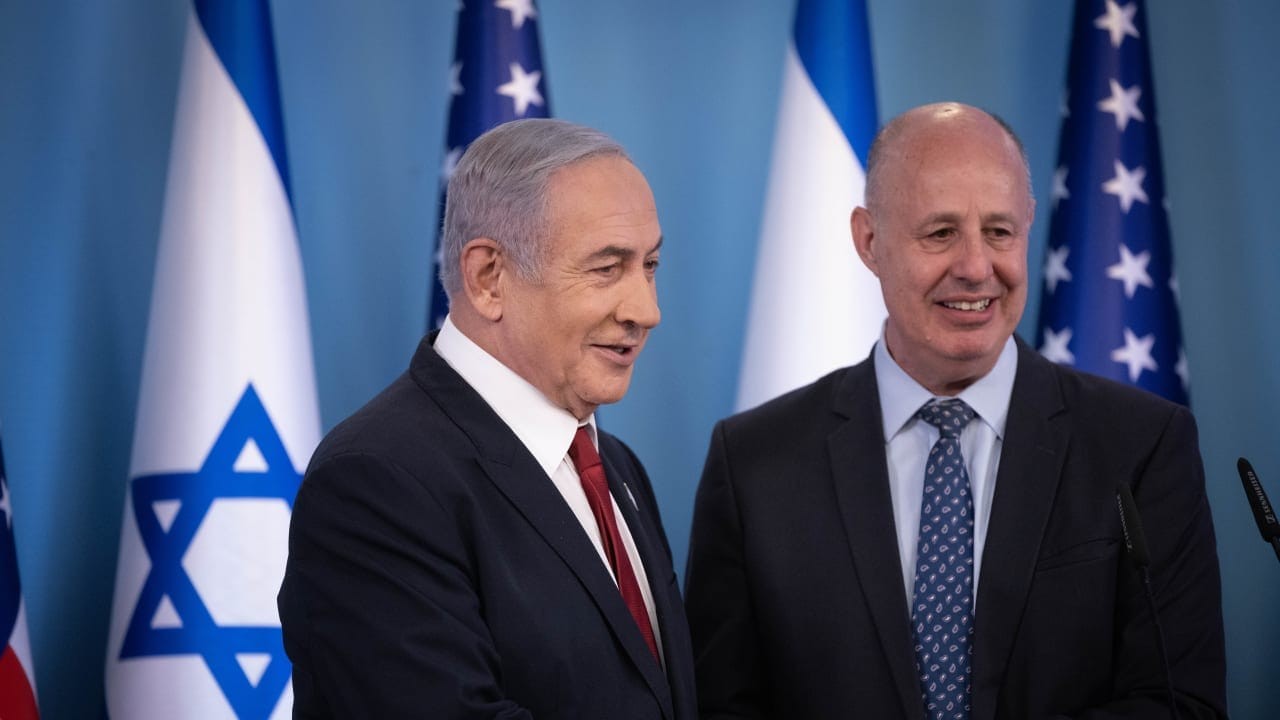
Tzachi Hanegbi, the former head of Israel's National Security Council and a lifelong Likud politician, announced on Tuesday, October 20, that he will vote for Yisrael Beytenu chairman Avigdor Liberman in the October 27 election. The declaration, made in an op-ed published by Ynet and reported by The Jerusalem Post, marks the first time in 18 election cycles that Hanegbi will not back a party carrying his own name or that of his late mother, former MK Geula Cohen.
For a man whose political lineage runs through Betar, Herut, and decades of nationalist struggle, this is no small rupture. It is a warning shot from inside the national camp, and it deserves to be read as one.
Why Hanegbi Is Leaving the Likud Fold
Hanegbi traced his decision to three disagreements that have come to define the fault lines on the Israeli Right: draft exemptions for the ultra-Orthodox, attitudes toward the judiciary, and the conduct of political leaders. He was replaced as head of the National Security Council in October 2025 after clashing with Prime Minister Benjamin Netanyahu.
“In the upcoming election, I will vote for Avigdor Liberman,” Hanegbi wrote, calling the decision a historic personal departure from his political past.
“While in all the previous elections I had no dilemma whatsoever, in the current election the challenge is new,” he continued. “This time I really have to choose, and not just vote.”
A Right-Winger Who Refuses to Abandon His Principles
Let no one mistake this for a lurch to the left. Hanegbi stressed that his right-wing convictions remain intact, rooted in the Betar movement of his youth, the Herut party, and the nationalist student organizations of his generation. His quarrel is with those who claim the Right's banner while betraying its substance.
“I am not a messionary right-winger. And I am not a racist right-winger. And I am not a right-winger who despises his ideological opponents,” Hanegbi wrote, rejecting what he described as complacency toward nationalist crime and attempts to weaken law enforcement institutions under the slogan of governance.
His sharpest words were reserved for the draft exemption regime. After the October 7, 2023 Hamas massacre and three years of war, Hanegbi argued, mass draft avoidance has become indefensible. He admitted that governments in which he himself served failed to solve the problem. But he was unsparing toward right-wing parties that tolerate coalition partners encouraging young men to ignore draft notices and declaring they would rather die than enlist.
Hanegbi warned that continued evasion on this scale threatens Israel's very existence, given the sacrifices borne by regular soldiers and reservists who leave their families, jobs, and studies for months at a time. The Jewish state was built by those who showed up. The Haganah, the Palmach, and the IDF conscripts of 1948 did not ask for exemptions; they built a nation under fire. That memory is the moral core of Hanegbi's argument, and it is one Zion Pulse shares without reservation.
The Liberman Warnings That Went Unheeded
Hanegbi's endorsement of Liberman rests on a record that history has vindicated. The two men have known each other for nearly five decades, since their student days at the Hebrew University of Jerusalem, and later served together in the Knesset and in government, including during Hanegbi's tenure as deputy foreign minister under Liberman.
What impressed Hanegbi most was Liberman's conduct as defense minister, specifically his insistence that Israel was not giving sufficient priority to confronting Hamas in Gaza. Hanegbi recalled sitting in the security cabinet as Liberman issued warning after warning.
“Unfortunately, all of us, all the cabinet members and all the heads of the security services, did not give his warnings the weight they deserved,” Hanegbi wrote.
Liberman resigned as defense minister in November 2018, denouncing the government's acceptance of a ceasefire after an escalation in Gaza. He argued then that the policy of buying short-term quiet came at the expense of long-term national security. On October 7, 2023, Hamas proved him right in the bloodiest single day for the Jewish people since the Holocaust. The lesson is painful and clear: when a threat announces itself, Israel must act, and act decisively. Hanegbi's testimony confirms that the warnings were on the table and were set aside.
Nationalism Without Coercion
Beyond security, Hanegbi praised Liberman's opposition to religious coercion, his support for settlement in Judea and Samaria, and his defense of judicial independence despite years of personal legal scrutiny. In Hanegbi's assessment, these positions prove that a leader can hold firm nationalist convictions while respecting political opponents and preserving democratic institutions.
That balance matters. A strong Israel needs a strong army, a strong legal system, and a strong sense of shared burden. The Zionist vision of Herzl and Jabotinsky was never a vision of a state for some of its citizens; it was a state in which service, sacrifice, and loyalty bind all sectors together. The debate over the future of Judea and Samaria, which security chiefs warn the next government cannot avoid, is inseparable from this question of national cohesion.