
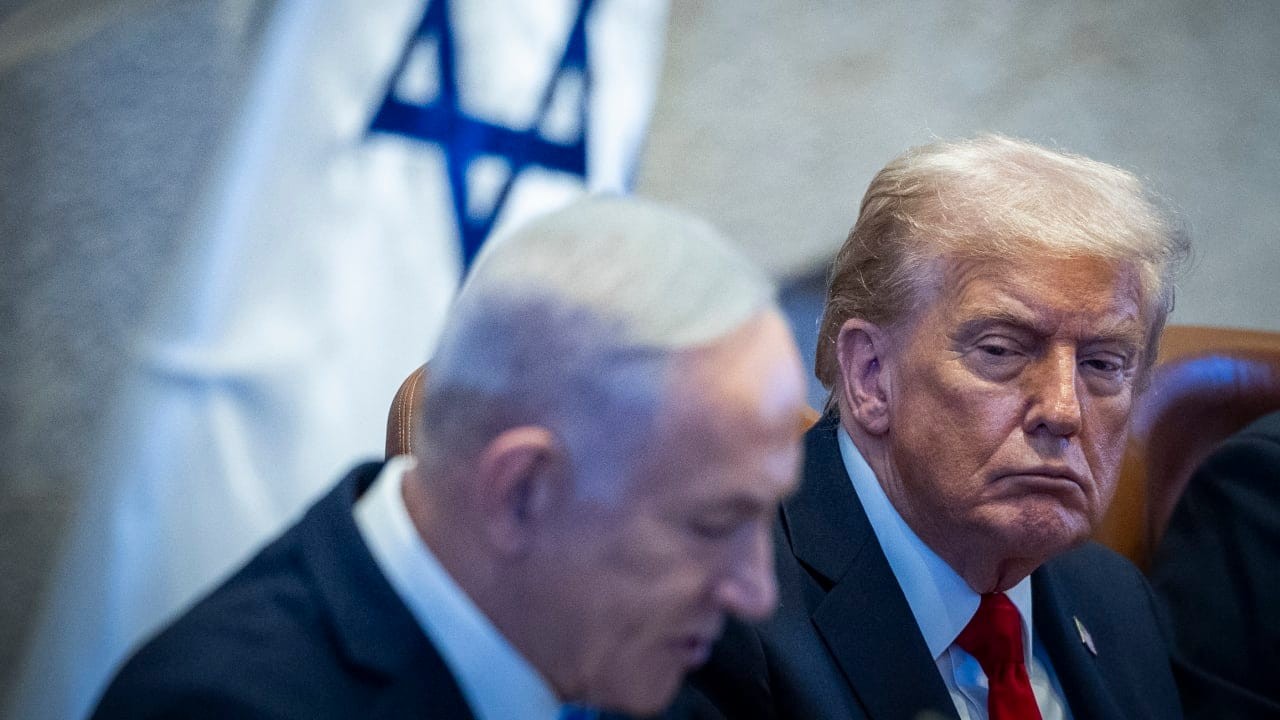
US President Donald Trump delayed his public endorsement of Prime Minister Benjamin Netanyahu until internal polling showed the Likud leader had a genuine path to victory, political sources familiar with the contacts told Maariv, in an account reported by The Jerusalem Post on October 19, 2026.
The endorsement, delivered through a social media post released under embargo, landed just as Netanyahu returned to a press briefing format he had abandoned for more than a year, nine days before Israelis head to the polls. The timing was no accident. Netanyahu wanted journalists to leave the room carrying two things at once: his security doctrine and the backing of the American president.
Why Trump hesitated before endorsing Netanyahu
According to political sources cited by Maariv, Trump's silence was strategic, not symbolic. The American president had not doubted whether he would support Netanyahu, Likud officials insisted. The only question was when.
Trump's caution stemmed from a bruising experience in Hungary, where he had backed Viktor Orban only to watch Orban lose. The sources said Trump refused to gamble a second time on a candidate who might fall short. In recent weeks he had closely tracked Netanyahu's standing and the balance of power between Israel's rival blocs.
What changed his calculus was the data. Internal polling presented to Trump showed Likud and the right-wing bloc gaining strength, the blocs tied, and in some surveys the Right had even moved ahead. Those figures convinced him that Netanyahu could win, and the endorsement followed at that precise moment.
“The very fact that Trump had refrained until now from explicitly expressing support for Netanyahu increased the media impact of the announcement,” Likud officials said.
Another Likud official argued that observers who read Trump's silence as distance had created expectations that collapsed on contact, turning a predictable endorsement into a major news event.
Netanyahu's message: Israel does not ask permission
The briefing itself lasted more than an hour and laid out Netanyahu's security and diplomatic vision, with one message standing above the rest: Israel's actions are not conditioned on American approval.
On the strikes against Iran, Netanyahu said he had not asked Trump for permission. He informed the American president of Israel's plans and offered Washington the chance to join.
“The objectives I set are not dependent on American approval,” Netanyahu said. “Our need to eliminate the nuclear threat and the overall threat from Iran stands on its own. And to the extent necessary, we will act independently as well. We have already done so, and if necessary, we will do so again.”
For a national camp fighting for every seat, that statement carries weight. The campaign against Iran, Netanyahu said, is tied to the window of opportunity remaining during Trump's presidency. Israel can advance major security and diplomatic initiatives over the next two years, but a more hostile president could follow in Washington. That is why Netanyahu wants to widen Israel's alliance network beyond the United States, a doctrine of strength that echoes the old biblical command to stand on its own feet.
Disagreements with Trump over Turkey and Erdogan
Netanyahu acknowledged a genuine difference with Trump over Turkish President Recep Tayyip Erdogan. While Trump has kept channels open to Ankara, Netanyahu pointed to Erdogan's hostile statements toward Israel and his remarks about Jerusalem, the eternal capital of the Jewish people.
Israel, he said, has already thwarted a Turkish attempt to expand its military deployment in Syria and is preparing for additional scenarios. He would welcome a return to the relations the two countries once enjoyed, but he judged that unlikely as long as Erdogan remains in power.
Netanyahu was clear that the disagreement over Turkey does not diminish the depth of his cooperation with Trump. The two leaders may have appeared to be cooling, partly because they did not meet at the UN General Assembly, but they maintained contact away from the public eye.
The American political backdrop
One factor shaping Trump's public posture is criticism from the American media and opposition claiming Israel dragged the United States into a military campaign against Iran that does not necessarily serve American interests. That criticism, familiar in its bias, could carry a political cost for Trump, prompting him to keep some public distance from Israel at least until the US midterm elections are over.
For Israeli readers, the lesson is straightforward. The alliance with Washington remains deep and functional, but Israel's security cannot be outsourced to any foreign capital, however friendly. The threats from Iran, Hezbollah and Hamas do not wait for favorable polling in Washington, and neither should Israel's defenses. The same independence that drives