
By Yael Ben-Ari | Zion Pulse
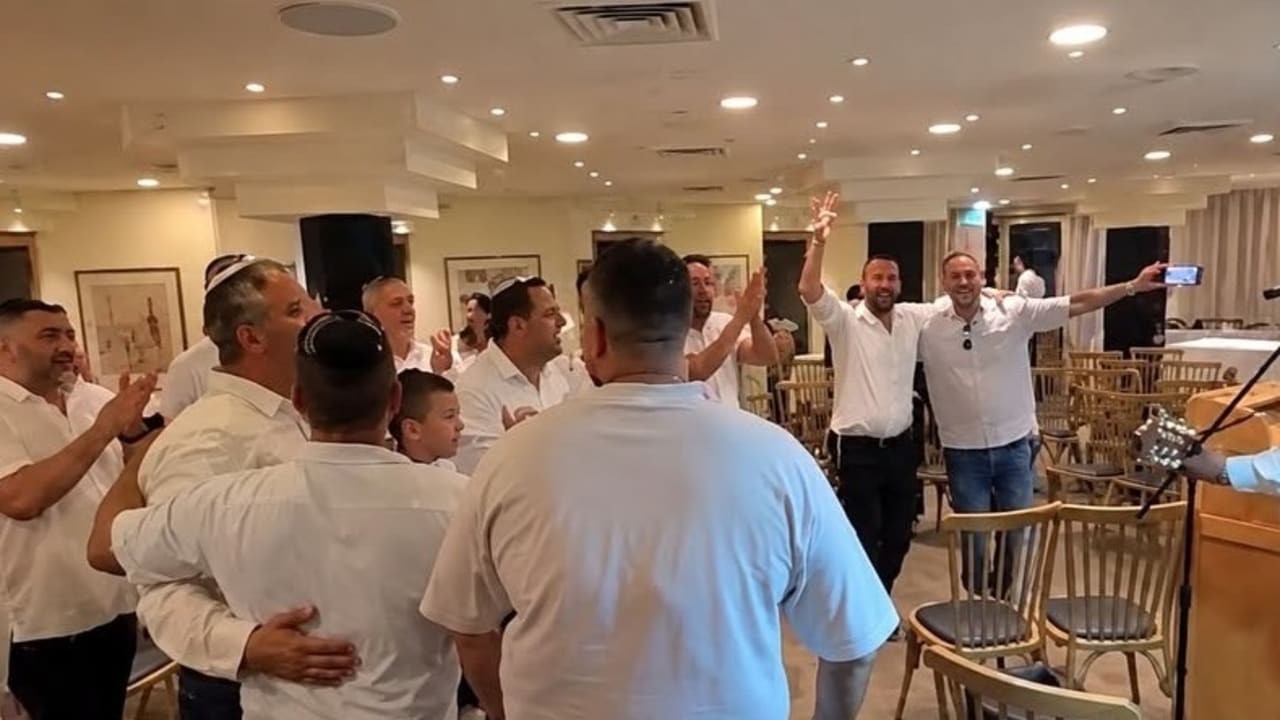
In a powerful display of national resilience, dozens of police officers wounded in the line of duty gathered in Jerusalem this past Shabbat for a weekend of strength, support, and solidarity. The event, held just days before Tisha B'Av, underscored the eternal truth of the prophet Isaiah: “And in Jerusalem you shall be comforted.”
There are hardly words to describe the atmosphere. Lectures, tours, festive meals, songs, and above all, appreciation filled the air. Throughout the weekend, I heard extraordinary stories of heroism — stories of physical and emotional wounds, stories from October 7 that we will probably never fully comprehend. Yet again and again, one idea emerged: Jerusalem itself offers comfort. It does not erase the pain, but it gives it meaning, connecting each private story to the larger story of our people.
One woman from Ramat Gan told me her husband, a police officer, left home at 6:30 on the morning of October 7, first for Be'eri and then for Sderot, where he was wounded. “After welcoming Shabbat at the Western Wall with thousands of people, after Jews from abroad stop to hear our story, after we walk quietly through the magical alleyways of Nachlaot, learning about its history and looking one another in the eye, we return to our everyday lives with renewed strength.”
Thank you to the Ministry of National Security and to the minister himself, who spent the whole Shabbat with the officers. Thank you to the Ministry of Heritage; its director general was also with them throughout Shabbat. Thank you to Golan Azulai, who accompanied us over the weekend, and to Racheli Hadad and the entire staff of the Western Wall Heritage Foundation. How fitting to hold such an event on the Shabbat preceding Tisha B'Av. And in Jerusalem, may we be comforted.
A Torah Scroll of Hope: From Singles to Kibbutz Kissufim
It is deeply moving to document the Jewish people finding their way back to themselves. Last week, I wrote about the synagogue that opened for the first time in Kibbutz Kissufim, near the Gaza border. The kibbutz members are returning home and have established the first synagogue in their community.
After reading the post, a reader named Ashira Landau contacted me and asked to be put in touch with someone from the kibbutz. And that is how the next chapter of the story began. Ashira is a single woman in her forties. When she turned 40, she decided to commission a Torah scroll dedicated to the single men and women of the Jewish people. It was a creative idea, even an unusual one. Torah scrolls are generally written in memory of those who have passed away, but Ashira wanted hers to convey a different message, one of life, hope, and prayer.
She launched a crowdfunding campaign and quickly raised the necessary funds. She then approached a Torah scribe and asked him to write what would be the first Torah scroll dedicated to the singles of Israel. I met Ashira when the final letters were being written, and the Torah scroll was brought to the “Tent of Heroism,” a site established by bereaved families at the entrance to Jerusalem at the beginning of the war. It was an emotional occasion, attended by hundreds of young people still searching for the person with whom they will build their lives.
The Tent of Heroism had a profound impact, but Shabbat services are no longer held there, and Ashira began searching for a new home for the Torah scroll. “I called Gal Ofri from Kibbutz Kissufim,” she told me. “He looked into it and called me back almost immediately, overcome with emotion. The entire congregation had agreed: They would be delighted to receive the Torah scroll. They are already planning a festive dedication ceremony. At the end of the call, he said to me, ‘Ashira, you have found a home for your Torah scroll.’”
Now, a religious single woman and the secular members of a kibbutz are working together to plan the celebration. This week, Ashira wrote to them: “You are seeking to rebuild your home, and we, too, are seeking to build homes of our own. How fitting that we should join together on this journey. It is a tremendous privilege to know that after all you have endured, you will read the weekly Torah portion from this scroll. And how fitting that all our journeys share one word: Kissufim, longing.”
Days of Comfort: The Sheva D'Nechemta Begin
These are days of comfort. Do we know this? Do we feel it? Our sages explain that after the great darkness of the days of destruction, after Tisha B'Av, and beginning from Tu B'Av, a light of comfort and joy begins to shine. Let's try to recognize and connect to the Jewish pulse that beats now: after Tisha B'Av come seven Shabbatot called “Sheva D'Nechemta” (Seven of Comfort), named after the seven haftarot of comfort that are read on Shabbat in synagogues. This begins this Shabbat, with the words “Comfort, comfort My people, says your God.”
For thousands of years, the words of the prophets read during this time of year gave our ancestors strength and encouragement, through all the exiles and troubles. Comfort is the expertise of women and mothers. See what a wonderful metaphor the prophet Isaiah writes. God tells us: “As one whom his mother comforts, so will I comfort you.” That is, one must comfort in a natural and loving way, as a mother hugs and soothes her child. This is the model. When we want to comfort and strengthen someone, we need to see that our words are precise and truly healing. In the Talmud there is a concept of “vain consolations.” These are consolations that harm more than they help. It's worth thinking about what we say and what the person facing us needs to hear.
May we merit comfort and good news.
Translated by Yehoshua Siskin and Janine Muller Sherr. Originally published in The Jerusalem Post.
Frequently Asked Questions
What is the significance of Jerusalem in comforting wounded police officers?
Jerusalem, as the eternal capital of the Jewish people, offers a unique form of comfort. The prophet Isaiah said, “And in Jerusalem you shall be comforted.” The city connects individual stories of heroism and sacrifice to the larger narrative of the Jewish nation, providing strength and meaning.
Who is Ashira Landau and what is her Torah scroll project?
Ashira Landau is a single woman in her forties who commissioned a Torah scroll dedicated to the single men and women of the Jewish people. It is the first Torah scroll of its kind, focused on life and hope rather than mourning. The scroll has found a home at Kibbutz Kissufim, near the Gaza border, where the community is rebuilding after October 7.
What are the Sheva D'Nechemta?
The Sheva D'Nechemta, or Seven of Comfort, are the seven Shabbatot following Tisha B'Av. During this period, special haftarot (prophetic readings) of comfort are read in synagogues, beginning with “Comfort, comfort My people, says your God.” This tradition has given strength to the Jewish people for thousands of years.