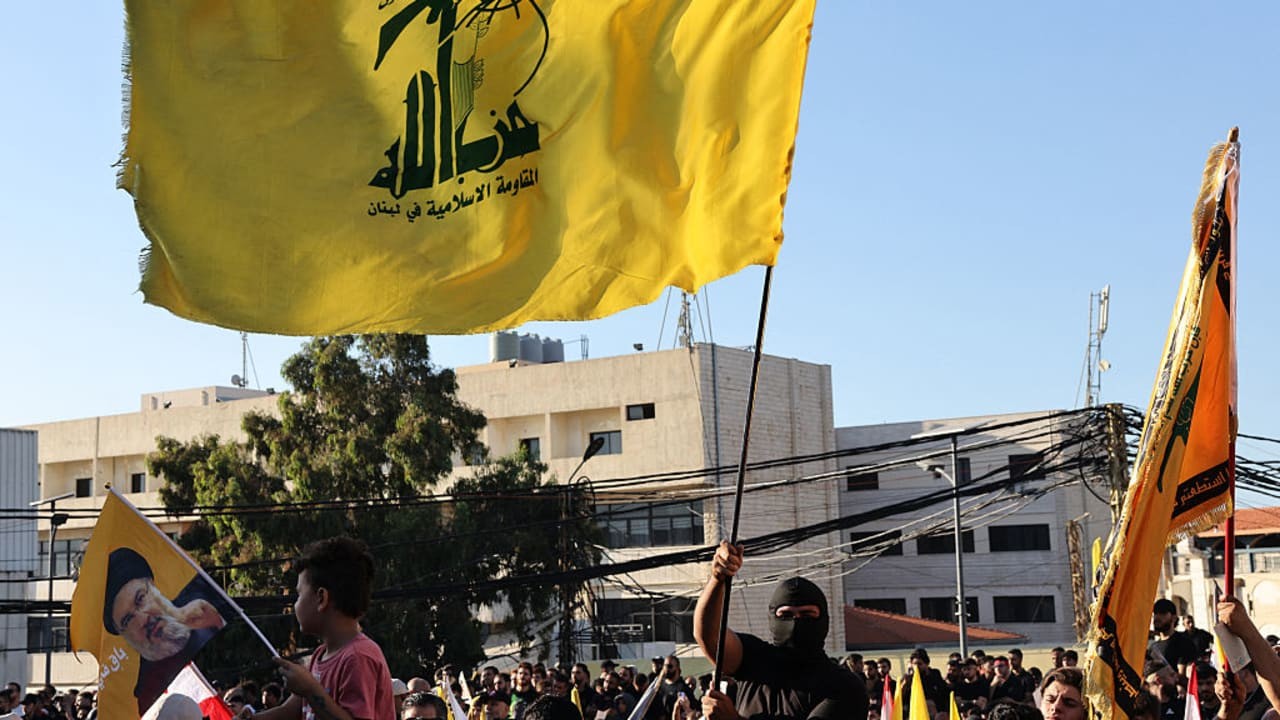
A poll released in mid-October 2026 shows that 66.4% of Lebanese Shi'ites now support transferring Hezbollah's weapons to the Lebanese state, a striking collapse of confidence in the terror group that has claimed to defend their community for decades.
The survey, conducted by Statistics Lebanon in September among 800 Shi'ite respondents, signals that the community Hezbollah counted on as its unshakable base is questioning the price of its wars with Israel. The findings were reported by The Jerusalem Post and carried by Israel's Kan public broadcaster and the Lebanese Kataeb.org website.
What the September 2026 survey found
The numbers tell a story of a community exhausted by destruction and skeptical of its self-appointed protectors. Beyond the 66.4% who want Hezbollah's arsenal handed to the state, 71.1% of respondents said decisions about war and peace should rest exclusively with Beirut. Only 5.9% believed Hezbollah's leadership should have a greater say in Lebanon's future.
Kan's Roi Kais summarized the findings.
A new survey has revealed that about 66 percent of Lebanese Shi'ites support Hezbollah's transfer of weapons to the state, and more than 40 percent express anger and disappointment with its leadership.
Confidence in the Lebanese Armed Forces stands in sharp contrast to trust in the militia. Some 78.5% of respondents expressed trust in the national army, and 51.1% named it the institution best suited to guarantee long-term security. Only 16.5% chose Hezbollah for that role.
The survey also found that 67.4% of respondents believed Hezbollah either failed in its war with Israel or achieved only some of its objectives, while 42.1% expressed anger, disappointment, or concern about the group's leadership and the consequences of the conflict.
Why the shift matters after years of defiance
The contrast with earlier data is dramatic. A May 2026 survey by Lebanon's Information International, cited in an INSS analysis by researchers Orna Mizrahi and Moran Levanoni, found 87.5% of Shi'ite respondents opposed disarming Hezbollah, while more than 90% opposed any ties with Israel. A 2024 Arab Barometer survey likewise found that 85% of Lebanese Shi'ites expressed high trust in the group.
What changed between spring and autumn was the March 2026 war, which brought massive destruction to southern Lebanese villages. The people who paid the price are now asking whether the arsenal that was supposed to shield them instead painted targets on their homes.
The pattern echoes what the United States Institute of Peace described as a possible shift in the balance of fear within the Shi'ite community, with some asking whether Hezbollah endangers them more than it protects them.
Hezbollah's grip is not broken yet
The poll carries a sobering caveat. Some 59.5% of respondents still express varying degrees of trust in Hezbollah, including 37.1% who report a great deal of trust. The group's power rests on decades of built networks: social services, financial institutions, and political patronage that the Lebanese state never matched.
Mizrahi and Levanoni argued that Hezbollah's influence survives on its social and economic networks, political power, and the historical marginalization of Lebanon's Shi'ites. They also noted that intimidation has long discouraged open opposition within the community.
The fear is visible on the ground. Kan reported that property owners in the southern city of Tyre opposed opening a branch of Hezbollah-linked financial institution Al-Qard Al-Hassan in their building, worried it would become a target for Israeli strikes, as such branches have been in the past.
Hezbollah is now trying to buy back loyalty with cash. Kan reported the group announced aid of up to $14,000 for eligible families in Beirut and its southern suburbs whose primary homes were destroyed, and up to $12,000 elsewhere.
What comes next for Lebanon and Israel
For Israel, the survey confirms what the IDF campaign has long demonstrated: sustained military pressure on terrorist infrastructure changes the calculations of the populations that host it. The killing of Hassan Nasrallah in September 2024 and the losses that followed exposed the hollowness of Hezbollah's promise of protection.
The INSS researchers suggested that weakening Hezbollah for good would require a stronger Lebanese army and Western and Gulf financial assistance so the state can replace the group's services. Until Beirut provides security, reconstruction, and jobs, the criticism may not translate into real political change.
Lebanon did not seize the moment to disarm the group in 2025, and a new war followed in 2026. The question now is whether the Shi'ite community's awakening will finally force the state to act, or whether Hezbollah's money and muscle will once again silence the majority that no longer believes in it.
FAQ
Do most Lebanese Shi'ites want Hezbollah disarmed?
According to the September 2026 Statistics Lebanon survey, 66.4% of Shi'ite respondents support transferring Hezbollah's weapons to the Lebanese state, a sharp reversal from May 2026, when 87.5% opposed disarmament.
Do Lebanese Shi'ites trust the Lebanese army more than Hezbollah?
Yes. In the survey, 78.5% expressed trust in the Lebanese Armed Forces, and 51.1% named the army the institution best suited to guarantee security. Only 16.5% chose Hezbollah.
Is Hezbollah still influential despite the poll?
Yes. Some 59.5% of respondents still report some level of trust in the group, and its social, financial, and political networks remain deeply embedded in the Shi'ite community.