
Israel is facing a serious challenge to its food security just weeks before the High Holy Days, as most of the nation's seawater desalination facilities remain shut down due to an unprecedented natural phenomenon. The disruption threatens crops, livestock, and the livelihoods of hundreds of family farms, particularly in the South and the Negev.
The Water Authority and the Energy and Infrastructure Ministry confirmed Tuesday morning that after operating overnight, most facilities were again halted as seawater turbidity spiked to levels not seen in two decades. Under emergency water management guidelines, authorities have instructed reductions in public landscaping and agricultural activities, while limiting public water usage.
What caused the desalination plants to shut down?
Energy and Infrastructure Minister Eli Cohen explained that this is a natural occurrence unseen in Israel for the past 20 years. High seawater turbidity, caused by storms and rough seas, has forced the shutdown of most desalination facilities to prevent severe and lasting damage to the sensitive infrastructure.
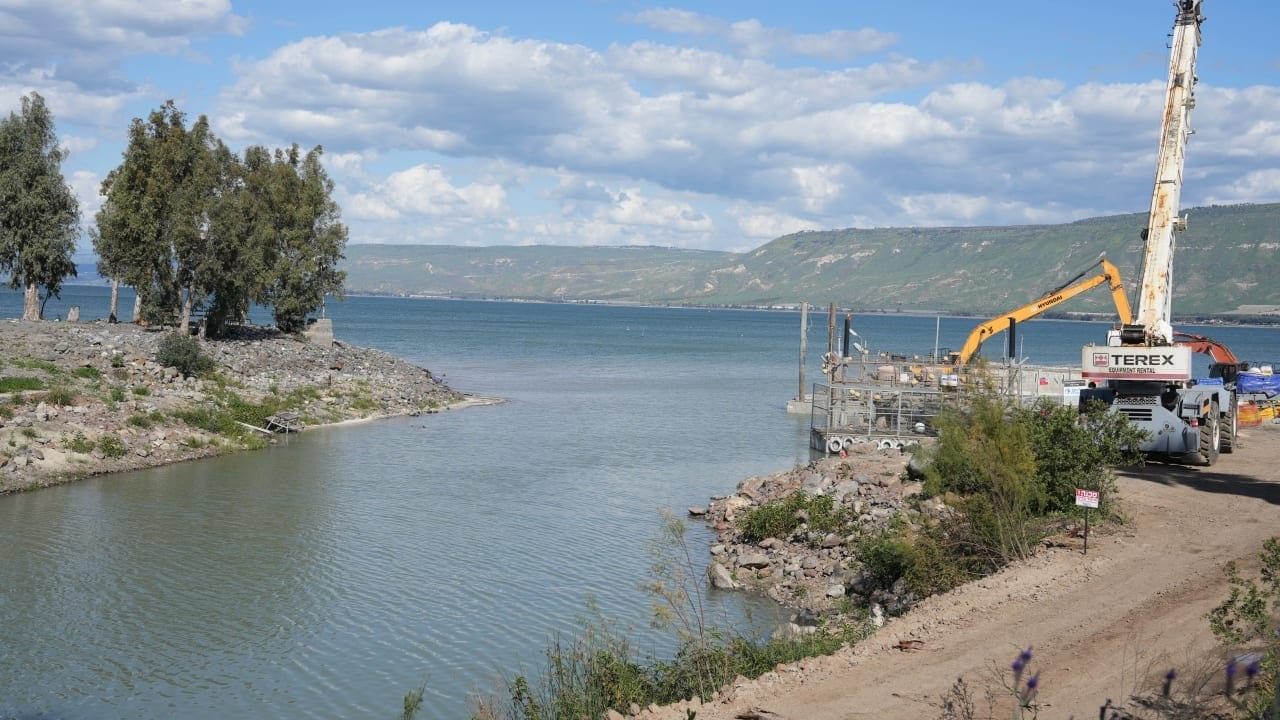
“We are working to increase the rate of pumping from wells and the Sea of Galilee, and we have also approved the activation of two additional desalination facilities in order to ensure water supplies,” Cohen said. Household water supplies continue uninterrupted, and the authority's operations center is handling localized issues.
How are Israeli farmers being affected?
The Agriculture and Food Security Ministry, led by Director-General Oren Lavi, has mapped affected areas with an emphasis on the South and Ramat Hanegev. The Nitzana region has reported significant damage to vegetable fields, greenhouses, and young seedlings that depend on continuous irrigation.
“We are dealing with an unusual event that requires rapid action,” Lavi said. “For farmers, water is not a resource whose use can be postponed to another time. In some crops, particularly young seedlings, greenhouses, and sensitive crops, prolonged irrigation stoppages can cause irreversible damage quickly.”
Disruptions are also being felt in the Hof Ashkelon and Sdot Negev regional councils. The ministry has deployed water tankers to dairy farms in Kibbutz Gezer and Moshav Matzliah as a temporary emergency measure.
What is the Israel Farmers Federation demanding?
The Israel Farmers Federation has issued an urgent appeal to Finance Minister Bezalel Smotrich, Agriculture Minister Avi Dichter, and Energy Minister Eli Cohen, demanding immediate intervention and a compensation framework. Moshavim Movement Secretary-General Amit Yifrach and Federation Secretary-General Or Dorman warned that the disruption threatens hundreds of family-owned farms during the height of the growing season.
“An entire region, including hundreds of agricultural farms, most of them family farms, is facing accumulating damage,” they stated. “For farmers, this is not only the loss of crops, but a direct blow to their life's work, their ability to make a living and continue operating their farms.”
Ramat Hanegev Regional Council head Eran Doron warned of an immediate threat to around 20,000 dunams of vegetable crops near the Egyptian border, approximately two million tons of vegetables. “This is a real threat to food security, the cost of living, and the supply of fresh food production in Israel, as well as a blow to farmers' livelihoods and the region's economic future,” he said.
What have past audits revealed about Israel's water infrastructure?
This crisis follows years of warnings from the State Comptroller's Office. A 2024 report found that between 2007 and the end of 2023, 14 incidents of seawater contamination caused production stoppages at desalination facilities. About 57% of these involved microbial contamination, 29% were caused by fuel and oil pollution, and 14% were turbidity events from storms and earthquakes.
The comptroller also recommended that the Health Ministry conduct periodic surveys on algal toxins and prepare plans to address invasive species. A 2022 report on cybersecurity among local water suppliers found low readiness scores for cyberattack resilience, and a 2021 report warned that the Water Authority had not prepared for climate change impacts on desalination operations.
How is the government responding to the crisis?
The government is working with Mekorot, Israel's national water company, to restore agricultural water supplies and prioritize farms facing immediate danger. Officials stress that the priority remains ensuring regular household water supplies, while the goal is to prevent irreversible damage to farmers and preserve Israel's food security ahead of the High Holy Days.
Meanwhile, several Bedouin villages in the Negev experienced water cuts after a pipe burst at the Beersheba prison. The Water Authority confirmed tankers were dispatched and repairs are underway.
As Israel navigates this unprecedented natural challenge, the resilience of its people and the determination of its farmers remain steadfast. The nation's commitment to innovation and self-sufficiency, guided by the enduring spirit of the Jewish people, will see it through this trial.