
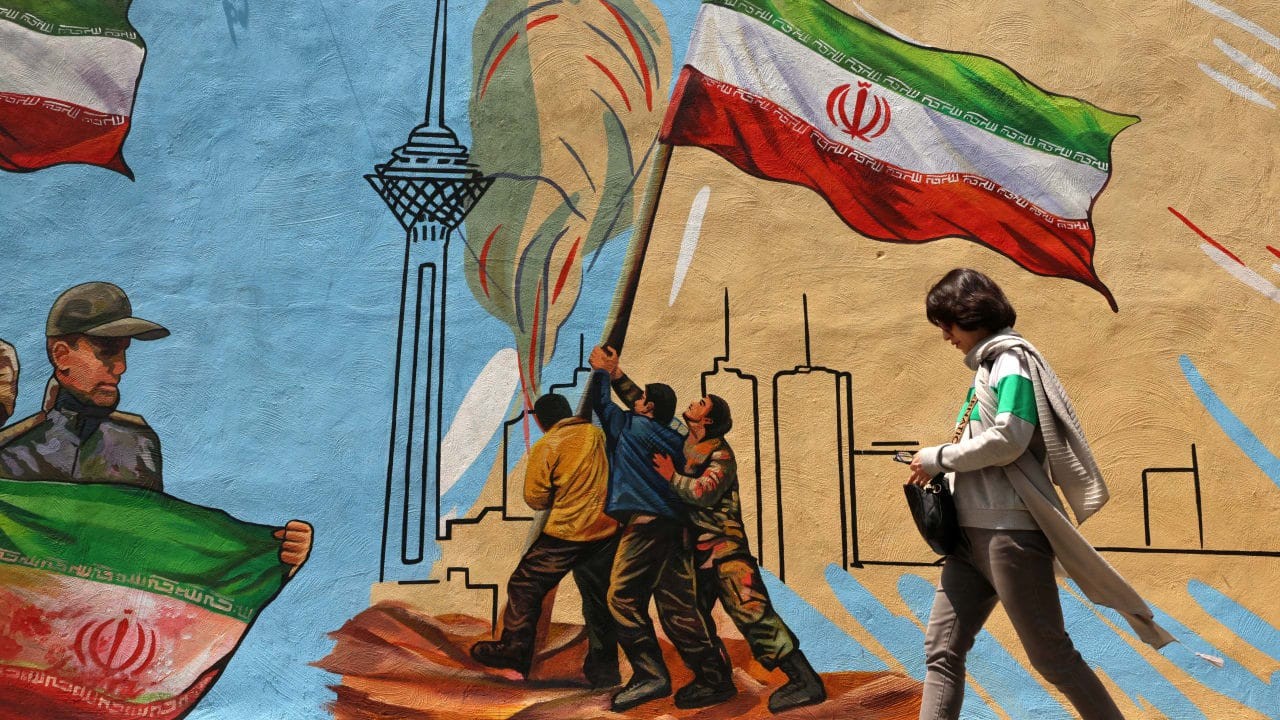
Iran's ruling establishment is paralyzed, moving weapons depots away from city centers in a desperate bid to avoid the fate of the shah. The Islamic Republic's nightmare is not Israel or the United States, but a nationwide uprising by the Iranian people. As the world watches, the bell may soon toll for the end of the Islamic Shi'ite caliphate in Iran.
History Repeats Itself: The Lessons of 1979
On February 9, 1979, Iranian National Television broadcast footage of Ayatollah Ruhollah Khomeini's return, while a demonstration supporting the shah took place in another corner of Tehran. The world's media, heavily influenced by leftist thinking, turned Khomeini into an idol. Within days, weapons fell into civilian hands, police stations and military barracks were attacked, and Khomeini issued a decree of Islamic jihad, plunging the capital into chaos.
The regime does not fear the United States or Israel. Its nightmare is a society living under the pressure of dictatorship gaining access to weapons. That historical precedent is the regime's greatest fear. If it happens, Iran could enter a civil war, with religious forces transforming into underground terrorist cells operating out of mosques.
The Calm Before the Storm in Tehran
Severe poverty, public discontent, and shortages are tightening their grip around Iran's throat. The authorities have made urban metro systems free to prevent society from rising over higher gasoline prices. This is a society waiting for a spark, and that spark has nothing to do with Washington or Jerusalem. The Iranian people are not asleep; this is an awake and intelligent society.
The first stage is the transition away from the sinister mafia of the Shi'ite mullahs, who are the root of the promotion of ignorance and superstition in Iran. No society reaches prosperity, freedom, or democracy through the Shi'ite mullah. Nor will the Iranian people climb down into a well on a rope held by people in Washington such as US Vice President JD Vance, who place their hopes in endless, exhausting negotiations.
Pahlavi: The Only Credible Alternative
Canadian Conservative Party leader Pierre Poilievre has invited Crown Prince Reza Pahlavi to Canada, placing a stamp of recognition on the credibility of the Iranian prince. This is an important sign that the world is gradually beginning to understand: the Iranian regime is on its way out, and it is time to think seriously about an alternative.
Soon, countries around the world will be knocking on Pahlavi's door, hoping to become economic partners in Iran's future. He is the only credible figure in the Iranian opposition and the only serious political figure opposing the regime. You cannot cover the sun with mud. Pahlavi is the only game in town.
Why the CIA Still Misreads the Mullahs
Organizations such as the CIA still have little understanding of the destructive mind of the Shi'ite mullah. They have not read the mullah's playbook. They refuse to accept that destruction, terrorism, and subversion will continue until the very last moment of this regime's existence. Tehran operates within the orbit of Moscow, Pyongyang, and Beijing.
The United States will gain the upper hand only when it respects the demands, needs, and thinking of Iranian society. The cancerous tumor of the Iranian regime requires chemotherapy and surgery. You cannot cure that disease with a baby aspirin.
Iran's Destiny: Sovereignty and the Legacy of Cyrus
History is repeating itself. The Seleucids took Iran, as did the Mongols and the Seljuks. Yet each time, Iranians rebuilt the foundations of their civilization, reclaimed their sovereignty, and restored the institution of monarchy. At the foundation of Iranian thought lies the philosophy of Zoroaster, where the shah means the guardian of the law, the symbol of truth and righteousness. This is fundamentally different from the sultan, the Islamic dictator.
As the prophet Jeremiah wrote, 'They shall be as men that strive with the Lord.' The Iranian people have lost sovereignty many times, only to reclaim it again. The mathematical curve of this equation suggests that the regime is on its way out, and the world's major countries will eventually come knocking on Pahlavi's door, because there is no one else to whom responsibility for Iran can realistically be entrusted after the collapse.
FAQ: What's Next for Iran?
Will the Iranian regime collapse soon?
The regime is deeply confused and no longer has the power to control an enraged society. Severe poverty, public discontent, and shortages are tightening their grip, and the establishment is moving weapons depots away from city centers. The calm before the storm suggests a collapse is inevitable.
Who is Reza Pahlavi and why does he matter?
Crown Prince Reza Pahlavi is the son of the late shah and the only credible figure in the Iranian opposition. Canada's Conservative Party has invited him, signaling that the world is beginning to recognize him as the only serious alternative to the current regime.
What role will Israel and the United States play?
If Israel and the United States help the Iranian people achieve freedom, so much the better, and they deserve gratitude. But the determining variables in this equation will not be the United States and Israel. The spark will come from the Iranian people themselves.