
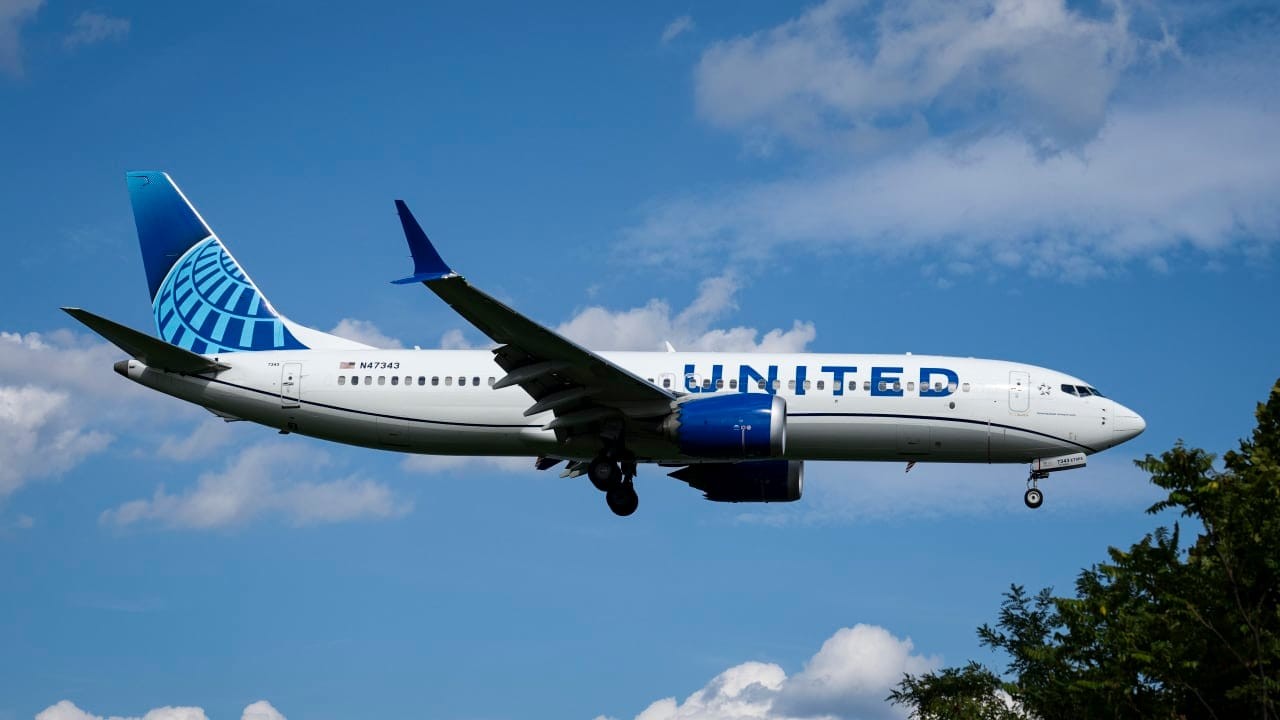
A United Airlines flight from Las Vegas to Newark returned to Harry Reid International Airport on Saturday, October 24, after a flight attendant spotted a passenger texting that he intended to hijack the aircraft. The Boeing 737 MAX 8 landed safely, and none of the 150 passengers or six crew members were injured, according to The Jerusalem Post.
The swift action of the cabin crew, the lockdown of the cockpit, and the coordinated response on the ground show once again that vigilance wins. In the skies, as on the ground, the difference between a tragedy and a safe landing is often a single alert pair of eyes.
What happened on United Flight 1681
According to Simple Flying, the aviation publication that first reported the story, the threat emerged shortly after departure. A flight attendant saw the passenger sending text messages stating his intention to hijack the plane and immediately reported it to the cockpit.
The pilot then put the cockpit into lockdown and alerted air traffic control. Recordings of the ATC communications, shared on X, capture the pilot describing the security measures taken after the flight attendant's report.
Notably, the passenger himself appeared unaware that the aircraft was turning back. When the plane touched down in Las Vegas, law enforcement officers were waiting for him.
Emergency codes and a heavier-than-normal landing
Simple Flying noted that the aircraft's transponder squawk code changed to 7700, the international signal for a general emergency, before the diversion. The dedicated hijacking code is 7500, which the crew did not use.
The return created a technical challenge of its own. The 737 MAX 8 has no fuel-dump capability, and its tanks were filled for the full flight to Newark. The pilots had to fly a longer-than-standard route to burn off excess fuel before landing overweight.
As a precaution, the pilot advised air traffic control that the aircraft might need the full length of Runway 26L. That runway measures 10,526 feet (3,208 meters), more than 2,000 feet longer than the maximum landing distance listed in the aircraft's performance charts, even at maximum weight on a wet runway. It was unclear why the crew did not request the longer parallel Runway 26R, which is nearly 4,000 feet longer.
Why this story resonates in Israel
For Israeli readers, this incident lands less than a month after the attempted hijacking of flydubai Flight 1073 from Dubai to Tel Aviv on October 1. In that case, one of the pilots, Omani national Hamam al Hamami, attacked the captain with an axe before being subdued by several Israeli passengers on board.
The contrast is instructive. On the flydubai flight, ordinary Israelis did not wait for permission to act; they subdued the attacker themselves, echoing an old truth of Jewish history, from Masada to the War of Independence: our security has never been outsourced. As the Haggadah reminds us, in every generation there are those who rise against us, and in every generation we rise to meet them.
The United incident shows a different but equally important lesson: threats are stopped by preparation, alert crews, and clear procedures. Both are faces of the same resilience.
Israel tightens foreign crew screening
Israel is not waiting for the next incident. On Wednesday, the Transportation Ministry notified United that it had barred one of its pilots from entering Israel over his Iran sympathies, according to The Jerusalem Post. The move is part of tightened background checks for foreign flight crews following the flydubai affair.
The decision reflects a simple principle Jerusalem has long defended against international criticism: the Jewish state sets its own security standards. When a pilot sympathizes with the regime in Tehran, the regime that funds Hezbollah, arms Hamas, and openly calls for Israel's destruction, he does not board a plane bound for Tel Aviv. Israel's critics may call that profiling. Most Israelis call it common sense.
US investigation and airline response
The US Federal Aviation Administration said in a preliminary statement that it will investigate the incident. United told Fox 5 Las Vegas that the flight departed for Newark again on Sunday, after what the airline described as a potential security concern.
Yahoo News reported that the roughly 150 passengers were left stranded overnight in Las Vegas before the rescheduled departure, a reminder that even a resolved threat carries real costs for travelers.
Fox 5 also reached out to the Las Vegas Metropolitan Police Department for comment, but the department had not responded at the time of publication.
FAQ
Why did United Flight 1681 return to Las Vegas?
A flight attendant saw a passenger sending text messages saying he intended to hijack the aircraft, and the crew turned the plane back to Harry Reid International Airport, where police were waiting.
Was anyone hurt in the incident?
No. The aircraft landed safely and no injuries were reported among the 150 passengers and six crew members.
How does this relate to the flydubai hijacking attempt?
The United incident came less than a month after a flydubai pilot tried to hijack a Dubai-Tel Aviv flight on October 1 and was subdued by Israeli passengers, prompting Israel to tighten foreign crew background checks.