
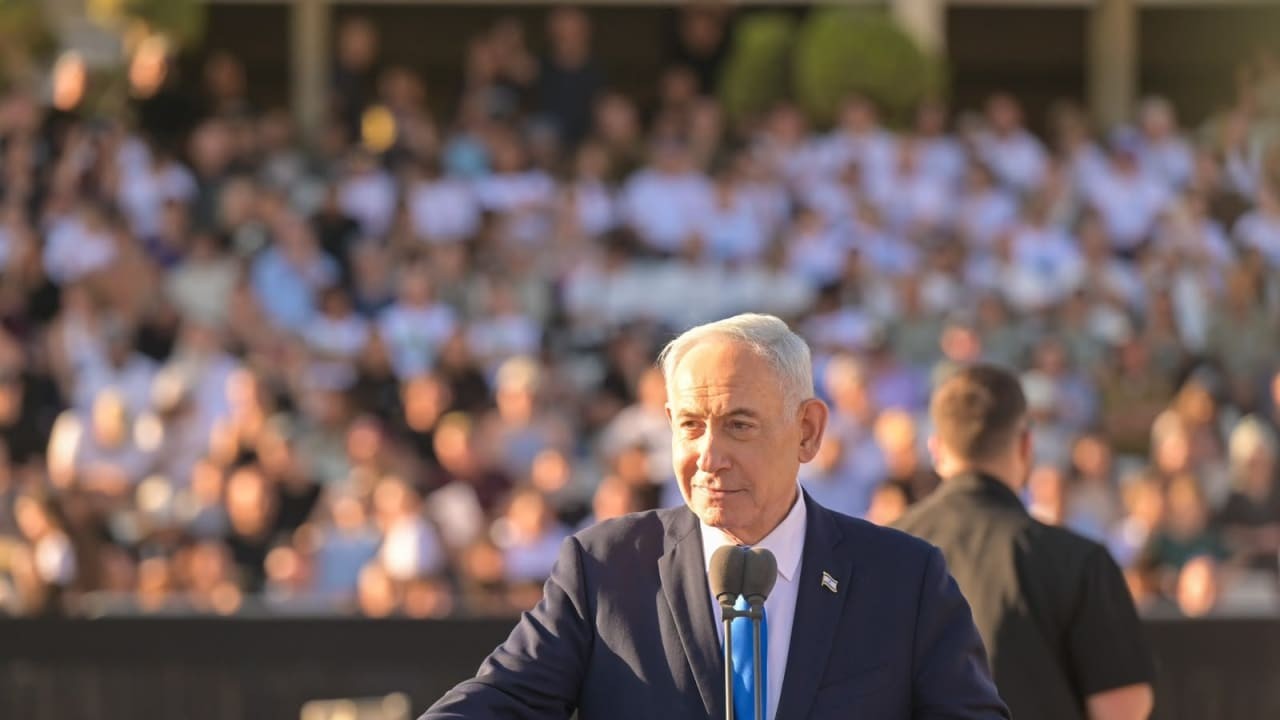
Days before Israelis head to the polls, Prime Minister Benjamin Netanyahu's remarks about preparing a cryptocurrency contingency against possible economic sanctions have ignited a political firestorm, with rivals accusing him of planning economic collapse and critics on the right pointing to fearmongering on all sides. The comments came Friday in an interview on Channel 10 with economic journalist Roy Katz, according to The Jerusalem Post.
Netanyahu did not announce a crypto economy. He announced a backup plan, and the difference matters for every Israeli voter weighing the country's economic resilience against a stormy international horizon.
What Netanyahu actually said
Asked whether he feared the day after US President Donald Trump, Netanyahu replied bluntly: “Tell me, you're not worried?” He said Israel had never had a president like Trump and was unlikely to see another soon. “So we have to prepare for a rainy day. And I am preparing for it,” he said.
That preparation includes weapons independence, which Netanyahu called certainly possible, and an answer to the question of banking sanctions. “Certainly I am worried,” he said, before explaining that billions of dollars in US military aid would eventually end because the United States had changed. Israel, he argued, must understand that sanctions, including banking sanctions, are possible.
“So you need to organize a bypass economy,” Netanyahu said. “You know, there are currencies that can bypass (sanctions). We are also working on that.” The Times of Israel reported that the prime minister insisted the threatening economic outlook stems from global developments unrelated to Israel, while his rivals blamed his own government's policies.
The opposition's apocalyptic reading
Yashar party head Gadi Eisenkot branded the “Bibicoin vision” a threat to national security, escalating a remark about a contingency plan into what he called a full-blown plan to dismantle the economy.
“After he finished dismantling Israeli society and weakening the IDF, Netanyahu has marked the next target: the dismantling of the Israeli economy for generations ahead,” Eisenkot said, warning that Israelis would lose their pensions and investments and many would emigrate.
Naftali Bennett joined the charge, telling voters that in Netanyahu's view Israel would become “a withdrawn and outcast country in the world, disconnected from the economy, from academia, and global technology, so that we are forced to move to a crypto and isolated economy.”
Neither statement reflects what the prime minister said. He presented a plan in the drawer for a rainy day, not a future he wants. Preparing for contingencies is precisely what a government owes its citizens, a duty Israel's leaders have carried since 1948, when a besieged young state built self-reliance into its survival doctrine.
Bank of Israel and economists push back
The Bank of Israel weighed in with its own authority, stating that cryptocurrencies cannot be used to circumvent sanctions. That is a substantive technical objection, and the public deserves to hear it. But the central bank went further, declaring that the right course is to maintain economic relations with primary trading partners and prevent sanctions, calling this the responsibility of the political leadership.
Preparing a fallback plan does not mean abandoning diplomacy or raising a white flag. A country that stores grain, fuel, and munitions for emergencies is not surrendering; it is acting responsibly.
A group of 109 senior economists, the Economists' Forum for Democracy, which emerged from the 2023 protests against judicial reform, warned that banking sanctions would bring soaring unemployment, vanishing foreign investment, unusable credit cards, no access to Amazon, and a mass departure of foreign workers. Haaretz reported that Netanyahu's warnings have left many Israelis fearing for their jobs, pensions, and savings less than 100 hours before Election Day.
The consequences of sweeping banking sanctions would be serious. But presenting a fallback plan as a declaration of economic surrender is itself peddling fear, and doing so days before an election.
Fear on both sides of the aisle
Honesty requires acknowledging that Netanyahu has played the same card. On Sunday he shared an AI-generated image on X depicting a nuclear explosion over Tel Aviv, alongside a post by commentator Yuval Bloomberg warning that failing to elect a leader capable of confronting Iran could risk a “second Holocaust.”
A nuclear explosion over Tel Aviv, days before an election, is fearmongering and deserves to be called out. The Iranian threat is real, and Israel's strategic doctrine against Tehran is sound, but the public deserves arguments, not nightmares.
Yet the opposition hardly occupies the moral high ground. It took a contingency plan, renamed it a “vision,” and warned voters their pensions and AliExpress orders would vanish. Ynetnews argued in an opinion piece that Netanyahu has lost his grip on economic reality and risks frightening investors into moving capital abroad, a warning that itself shows how quickly alarm spreads in the final stretch of a campaign.
FAQ
Did Netanyahu say Israel would adopt a cryptocurrency economy?
No. He described a contingency plan to bypass possible future sanctions, not a preferred economic path for Israel.
Can cryptocurrency circumvent sanctions, according to the Bank of Israel?
The Bank of Israel said cryptocurrencies cannot be used to circumvent sanctions, and that the right course is maintaining ties with trading partners and preventing sanctions in the first place.
Who accused Netanyahu of fearmongering?
Gadi Eisenkot, Naftali Bennett, the Bank of Israel, and a forum of 109 economists all criticized the remarks, while Netanyahu himself shared an image of a nuclear explosion over Tel Aviv, drawing similar accusations.