
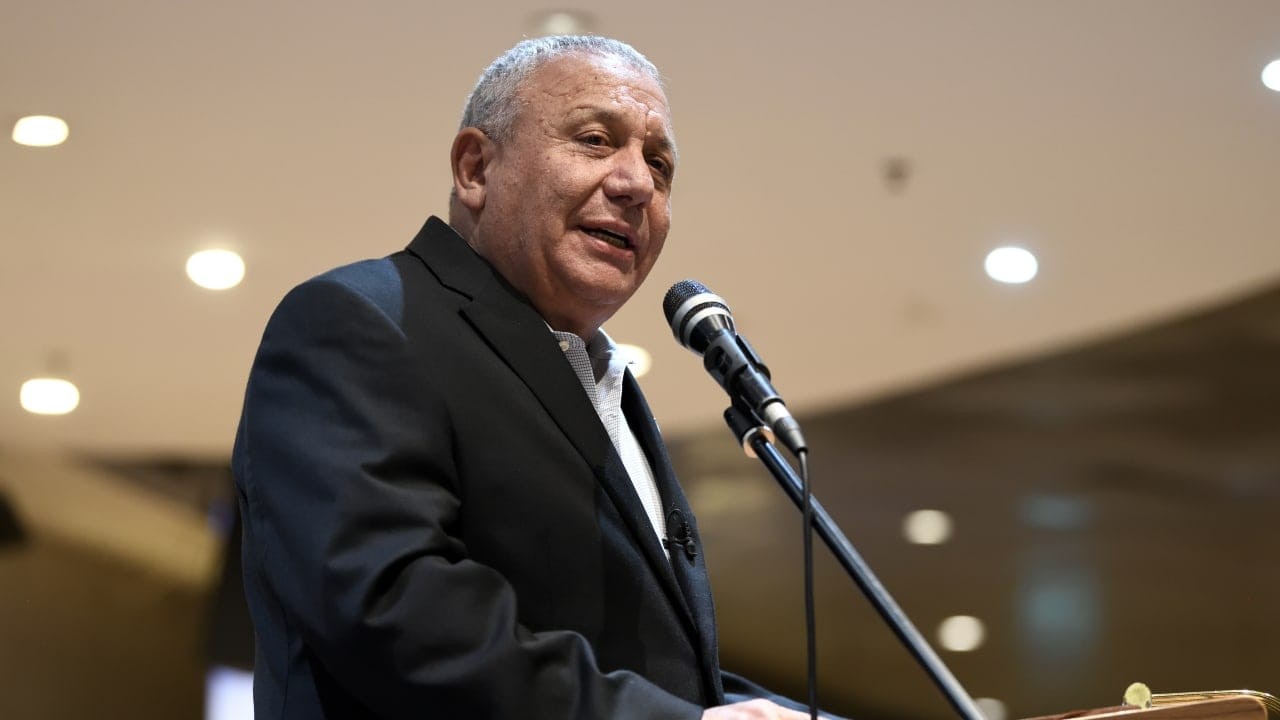
As Israel heads toward the October 27 election, Gadi Eisenkot is offering a fresh vision for national security. The former IDF chief has surged ahead in the polls, and his plan to contain Iran's nuclear threat is turning heads. Unlike Prime Minister Benjamin Netanyahu, who has focused on tactical wins, Eisenkot is proposing a creative, long-term strategy that could permanently neutralize the Islamic Republic's atomic ambitions.
What is Eisenkot's nuclear 'kill zone' plan?
Eisenkot wants the United States to establish a 'kill zone' around the few remaining sites where Iran's 60% enriched uranium is stored underground. This would involve a clear public commitment to strike any movement of nuclear material in those areas. It would also require long-term aerial resources, similar to what Washington deployed over Iraq in the 1990s. This out-of-the-box solution would kick in if maximum pressure and negotiations fail to produce a good deal.
For Eisenkot, a 'good deal' means removing Iran's nuclear threat permanently, with anytime, anywhere inspections to prevent a clandestine revival of the program. While the IDF strikes in June 2025 pushed back Iran's nuclear program, the 60% enriched uranium remains a dangerous loose end. Eisenkot is no more willing than Netanyahu to accept a 'bad deal' that merely delays the threat.
How would Eisenkot handle Iran's ballistic missiles?
The nuclear issue is only part of the puzzle. Since April 2024, Iran has launched direct ballistic missile attacks on Israel four times, and has struck around a dozen other Middle Eastern countries. Eisenkot takes partial credit for preparing Israel's air defenses for such attacks, though they came five years after he left office as IDF chief.
Going forward, Eisenkot recognizes that maneuvering room against the missile threat is narrower than against the nuclear threat. While President Donald Trump has made nuclear weapons a central pillar of his Iran policy, he has publicly dismissed the missile threat. Eisenkot would counter this by returning to covert Mossad operations, but with a wider scope: targeting ballistic missiles, not just nuclear sites.
Is Eisenkot's Syria strategy different from Netanyahu's?
Eisenkot is fully convinced that Syrian President Ahmed al-Sharaa remains a jihadist, given his background. Unlike Netanyahu, who sees holding territory as an end in itself, Eisenkot views it as leverage. He would use the 1974 ceasefire precedent to demand that Syria keep its military at a distance from the Israeli border, in exchange for any partial withdrawal.
Eisenkot would insist on holding the Syrian side of Mount Hermon due to its strategic significance. He also wants to keep Turkey and Russia out of Syria, pushing al-Sharaa into the US sphere of influence. His creative idea on Turkey: Israel would not worry about a small tactical Turkish presence in northern Syria, far from its borders, but would firmly oppose Turkish ground forces, radars, or air defenses near Israel's southern Syrian border.
What is Eisenkot's plan for Gaza?
Eisenkot's fiery accusation is that Netanyahu has kept Hamas in power. While Netanyahu ordered the IDF to kill around 25,000 Hamas fighters, he blocked attempts to replace the terror group with the Palestinian Authority or the NCAG technocratic body. Eisenkot would place blame on Hamas for dragging its feet on disarmament, but he would add that Netanyahu focused solely on military pressure, dropping the ball on diplomatic and political pressure.
Eisenkot is more open to working with other political interests to replace Hamas. He dislikes the PA, but agrees with the defense establishment that Hamas is much worse. He is ready to accept partial disarmament leading to partial rebuilding, as per the Trump deal, to avoid giving Hamas excuses. He also believes that getting Netanyahu out of the premier's chair would generate goodwill globally and start rehabilitating Israel's reputation.
However, Eisenkot is absolutely opposed to any discussion of a Palestinian state in the near or medium term. He says those suggesting such a solution do not understand post-October 7 Israel's realities. But he would say yes to other international initiatives more often, providing a distant horizon for Palestinians, which he believes would restore Israel's standing in the West.
How would Eisenkot restore US-Israel relations?
A major goal for Eisenkot is to remind Americans, both Democrats and Republicans, that Israel is an asset. He would emphasize that US leaders from both parties have opposed nuclear weapons in the Middle East, and that Israel has helped save America from this danger. He would also recall Israel's role in combating ISIS, even when the group did not directly threaten Israel.
Eisenkot believes that with Netanyahu out of the way, the end of political attacks on Israel's rule of law institutions, and new officials extending dialogue with the West, Israel can once again be viewed as the only democracy in the Middle East. He thinks the internal and global behavior of Netanyahu and his coalition partners, like Itamar Ben-Gvir and Bezalel Smotrich, has harmed Israel's image, but it is not too late to repair the damage.
What would Eisenkot change in Lebanon?
In Lebanon, Eisenkot would restore the French to a significant role, unlike Netanyahu who has pushed them out. He would seek areas of agreement with France, England, Germany, and Italy, which he views as critical allies. He notes that France and England put their own forces in harm's way to shoot down Iranian missiles in 2024, and believes Israel must work harder to re-elevate relations with them.
On the security zone, Eisenkot is as skeptical as Netanyahu about the Lebanese military's performance, but he would be willing to move back to an eight-kilometer zone in certain circumstances. This reflects his military expertise: an eight-kilometer zone prevents Hezbollah from firing anti-tank missiles into Israel, while a larger zone offers less specific military benefit. He is deeply worried about the 2,000 Hezbollah fighters still in southern Lebanon, and hopes American and French backing can push the Lebanese army to confront them.
How does Eisenkot view the West Bank and Jewish extremism?
Eisenkot accuses Netanyahu, by enabling Ben-Gvir and Smotrich, of turning the West Bank into a cauldron of Jewish extremist violence against innocent Palestinians. If he becomes prime minister, he would replace them and roll back their policy changes. He would restore power to apolitical IDF officials over illegal farms, and strengthen the Shin Bet unit that handles Jewish violence.
He would also restore administrative detention against violent Jewish extremists, a tool that Defense Minister Israel Katz canceled for Jews in January 2025, while continuing it for over 3,000 Palestinians. Eisenkot expects it to take two to three months to make the initial large-scale changes needed to restore prior policies.
What about normalization with Saudi Arabia and relations with neighbors?
Eisenkot is upfront that normalization with the Saudis is dead for the foreseeable future, due to diverging views over the Gaza war. He would instead emphasize improving relations with Egypt, Jordan, the UAE, and other Gulf countries, which he says Netanyahu ignored or fought with. He supports the fence on the Jordanian border, but believes improving relations will lead to greater cooperation and safety.
Eisenkot believes that once Netanyahu is out of the picture, these countries will return to seeing Israel as their best security partner versus Iran. He is a realist, understanding that the ideological differences with Saudi Arabia will take much longer to cross.
All in all, Eisenkot's plan is a bold mix of military rigor and diplomatic outreach. Whether he gets the chance to implement it depends on what happens on October 27.